Best indoor cat food: 5 formulas that account for a life spent mostly on the couch
Walk down the cat food aisle and an entire shelf is labeled indoor. None of the bags explain what that word is supposed to change. Her real workout most days is a four-minute sprint after a laser dot and a dash to the sound of a treat bag opening, which burns a lot less than an afternoon spent stalking a bird outside. That gap between what she burns and what a generic formula assumes she burns is where an indoor formula either earns its label or doesn’t.
As Amazon Associates we earn from qualifying purchases. Some links in this post are affiliate links; if you buy through them, we earn a small commission at no extra cost to you. We only recommend products we’ve used or researched thoroughly. See our full disclosure.
The five indoor formulas, at a glance
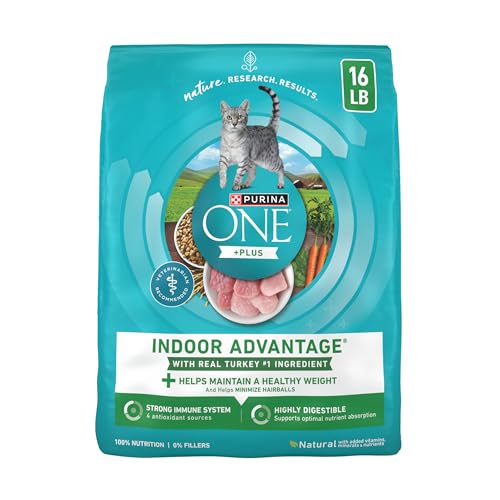
Purina ONE Indoor Advantage
Real turkey first · hairball fiber blend · widely stocked
- ✓ Real turkey as the first ingredient, no fillers
- ✓ Natural fiber blend built for hairball control
- ✓ Budget-friendly and easy to find
on Amazon
Price as of Sep 21, 2026, 9:21 AM EDT. Product prices and availability are accurate as of the date/time indicated and are subject to change.

Royal Canin Feline Health Nutrition Indoor Adult
Psyllium and beet pulp fiber · moderate calorie · ages 1–7
- ✓ Precise fiber blend to help move swallowed hair through
- ✓ Calorie level matched to a less active day
- ✓ Highly digestible protein sources
on Amazon
Price as of Sep 21, 2026, 9:21 AM EDT. Product prices and availability are accurate as of the date/time indicated and are subject to change.
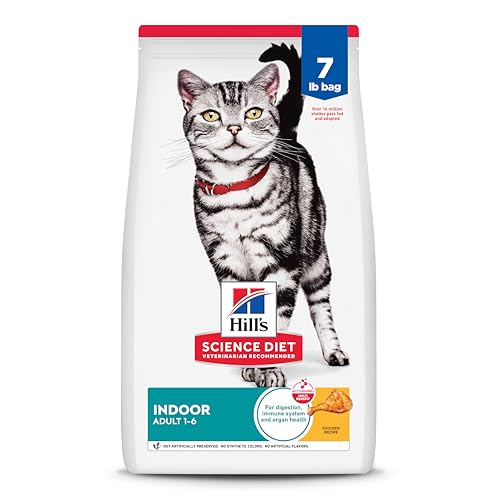
Hill’s Science Diet Adult Indoor
Modest calorie count · higher fiber · prebiotic blend
- ✓ Runs toward the low end of the category on calories
- ✓ Higher fiber content supports digestion and litter box cleanup
- ✓ Prebiotic blend for digestive support
on Amazon
Price as of Sep 21, 2026, 9:21 AM EDT. Product prices and availability are accurate as of the date/time indicated and are subject to change.

Blue Buffalo Wilderness Indoor
Grain-free · real chicken first · LifeSource Bits
- ✓ Highest protein percentage of the five
- ✓ No corn, wheat or soy
- ✓ Antioxidant-rich LifeSource Bits blend
on Amazon
Price as of Sep 21, 2026, 9:21 AM EDT. Product prices and availability are accurate as of the date/time indicated and are subject to change.
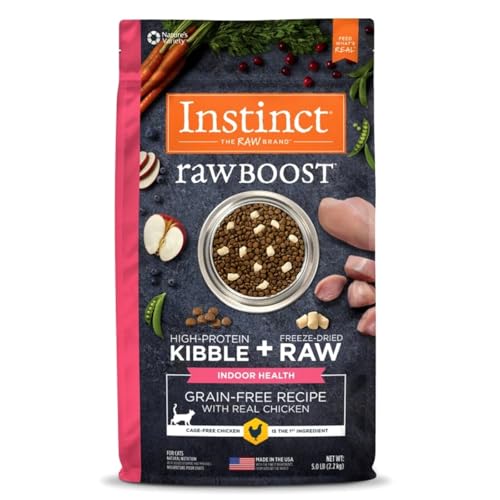
Instinct Raw Boost Indoor Health
Grain-free kibble · freeze-dried raw pieces · cage-free chicken
- ✓ Freeze-dried raw chicken pieces mixed into the kibble
- ✓ Highly digestible protein plus prebiotics
- ✓ Fewer calories built in for a less active day
on Amazon
Price as of Sep 21, 2026, 9:21 AM EDT. Product prices and availability are accurate as of the date/time indicated and are subject to change.
Quick take:
- Indoor cats carry real, documented obesity risk. A cat with little or no outdoor access is roughly twice as likely to end up overweight as one that spends real time outside.1
- “Indoor” on a bag should mean a moderate calorie density and a fiber blend built for hairball control, not just a word on the label.
- Free feeding, a bowl of dry food left out all day, is the habit most clinicians point to as the biggest driver of feline obesity.2 Portioned meals beat a bowl that’s never empty.
- The five formulas below cover the real range: an everyday value pick, a hairball-focused pick, the lowest-calorie option, a grain-free high-protein pick and one with actual freeze-dried raw pieces mixed in.
- A real weight change in either direction, in a cat who isn’t on a deliberate diet, is worth a vet visit before a food swap.
What “indoor” is actually supposed to change on the bag
Cats are obligate carnivores. They need a protein-forward, fat-moderate, carbohydrate-minimal diet built around amino acids that only come from animal tissue, and every complete commercial food carries an AAFCO life-stage statement confirming it’s balanced for that.3 “Indoor” isn’t one of those regulated life stages. It’s a formulation choice a brand layers on top of the required statement, and it usually shows up three ways: a lower calorie density per cup to match a quieter day, a fiber blend (often psyllium or beet pulp) built to help move swallowed hair through rather than back up, and sometimes a lower fat percentage tied to a healthy-weight claim.
None of that is standardized the way the AAFCO statement is. Two bags labeled “indoor” from two different brands can differ by a real margin in calories per cup, fiber percentage and protein source, which is exactly why the five below need to be compared card by card rather than trusted as a single category.
Why the calorie math matters more for a cat who stays in
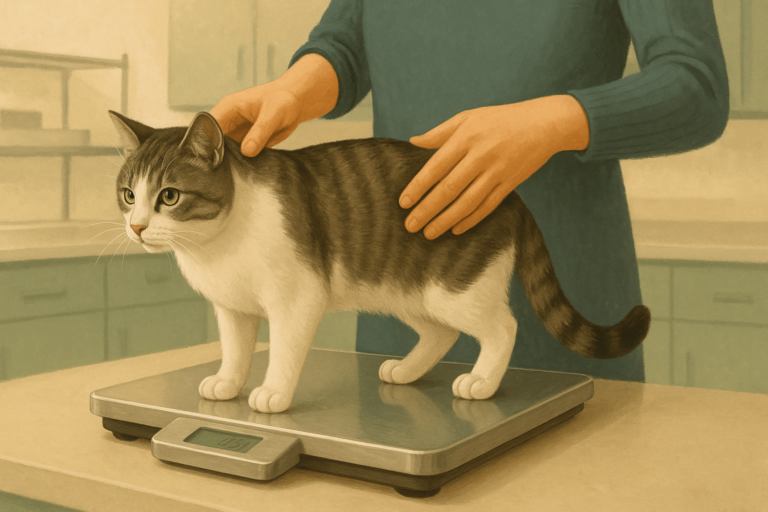
Feline obesity is the most common nutrition-related problem cats face, and one clinician at Cornell puts the share of overweight and obese cats she sees at roughly half her feline patients.2 Free access to a bowl of dry food left out all day is the habit most often blamed for it, since it lets a cat eat whenever she wants rather than at set meals an owner controls.2
Indoor cats carry extra risk on top of that baseline. A cat with little or no outdoor access is roughly twice as likely to become overweight or obese as one that spends real time outside, largely because the drop in physical activity isn’t matched by a drop in what goes into the bowl.1 None of this means an indoor cat needs a starvation portion. It means a formula that isn’t calorie-dense for a cat who mostly naps, paired with an owner who’s measuring rather than free-pouring, is doing real work rather than sitting on the bag as marketing.
This list is dry kibble specifically, since that’s where the “indoor” formulation choices concentrate. If you’re feeding wet, mixed or leaning that way, our wet food picks for indoor cats and our wet-vs-dry breakdown cover the rest of the aisle.
The five formulas we’d actually put in the bowl
Purina ONE Indoor Advantage
Real turkey leads the ingredient list, with a fiber blend built into the formula that’s aimed at hairball control rather than weight loss specifically. It’s the widest-stocked of the five, which matters if a bag runs low on a Sunday, and it sits at the price floor of this list. If budget is the deciding factor and your cat isn’t already fighting a weight problem, this is the reasonable default.
Royal Canin Feline Health Nutrition Indoor Adult
This is the most clinically formulated of the group. The fiber blend leans on psyllium and beet pulp specifically to help a cat pass swallowed hair rather than bring it back up, the calorie content is deliberately kept moderate to match a quieter day, and the protein sources are chosen for digestibility over raw protein percentage. It’s the pick for a cat with a genuine hairball problem, less so for a cat who needs to lose weight (Royal Canin sells a separate weight-management formula for that).
Hill’s Science Diet Adult Indoor
The calorie count here runs toward the low end for the category, which makes it the formula we’d reach for first with a cat who’s already carrying extra weight or trending that way at her last checkup. Fiber content sits on the higher side too, so expect a litter box benefit as a side effect of the digestive-support blend Hill’s builds the formula around.
Blue Buffalo Wilderness Indoor
The highest protein percentage of the five and the only grain-free option, built around real chicken as the first ingredient with no corn, wheat or soy. This is the pick for a cat who does better on a higher-protein, lower-carbohydrate plate, though grain-free by itself isn’t a health requirement for most cats. It’s a preference, not a fix.
Instinct Raw Boost Indoor Health
The only formula on this list that isn’t just kibble. Freeze-dried raw chicken pieces are mixed directly into the bag, on top of a grain-free base built with fewer calories for a less active day. It’s the closest thing here to a raw-curious owner’s entry point without committing to a full raw diet, and it costs more than the other four for that reason. We compared it directly against the Blue Buffalo formula, ingredient by ingredient, in our Instinct Raw Boost vs. Blue Buffalo Wilderness breakdown.
How to switch to a new formula without an upset stomach
Any of these five is a change from whatever’s currently in the bowl, and a cat’s gut needs time to catch up. Mix a small amount of the new food into the old for the first few days, then shift the ratio gradually over a week or two rather than swapping cold. Watch stool consistency along with whether she’s eating. Loose stool for a day or two during a transition is common. Anything that persists past a few days is worth a call to the vet rather than pushing through it.
What not to do
- Don’t leave dry food out all day “just in case.” Free feeding is the habit most associated with feline obesity, and portioned meals put you back in control of the actual number.2
- Don’t assume “indoor” means low-calorie by default. Check the kcal per cup or per gram if it’s on the bag. The five formulas above vary by a real margin.
- Don’t chase grain-free as the whole strategy. It’s a legitimate preference for some cats, not a guaranteed weight or health fix on its own.
- Don’t skip the vet visit if her weight shifts either direction. A food swap doesn’t diagnose why she’s gaining or losing.
When to call your vet
A cat who is gaining or losing weight without a deliberate diet change, who suddenly eats much more or much less than usual, or who’s vomiting or has diarrhea beyond a short adjustment window needs an exam, not a different bag of food. Weight changes read as a food problem far less often than owners assume. They’re frequently the first visible sign of a dental, kidney, thyroid or digestive issue. Our guide to cat health red flags walks through which signs are a same-day call and which can wait for a routine visit, and our piece on lowering an indoor cat’s kidney disease risk is worth reading if weight and thirst are both shifting.
If the actual issue is that she’s refusing food rather than gaining or losing weight on the food she gets, that’s a different problem with its own fixes. Our cat eating problems hub sorts the common refusal patterns and routes you to the right one.
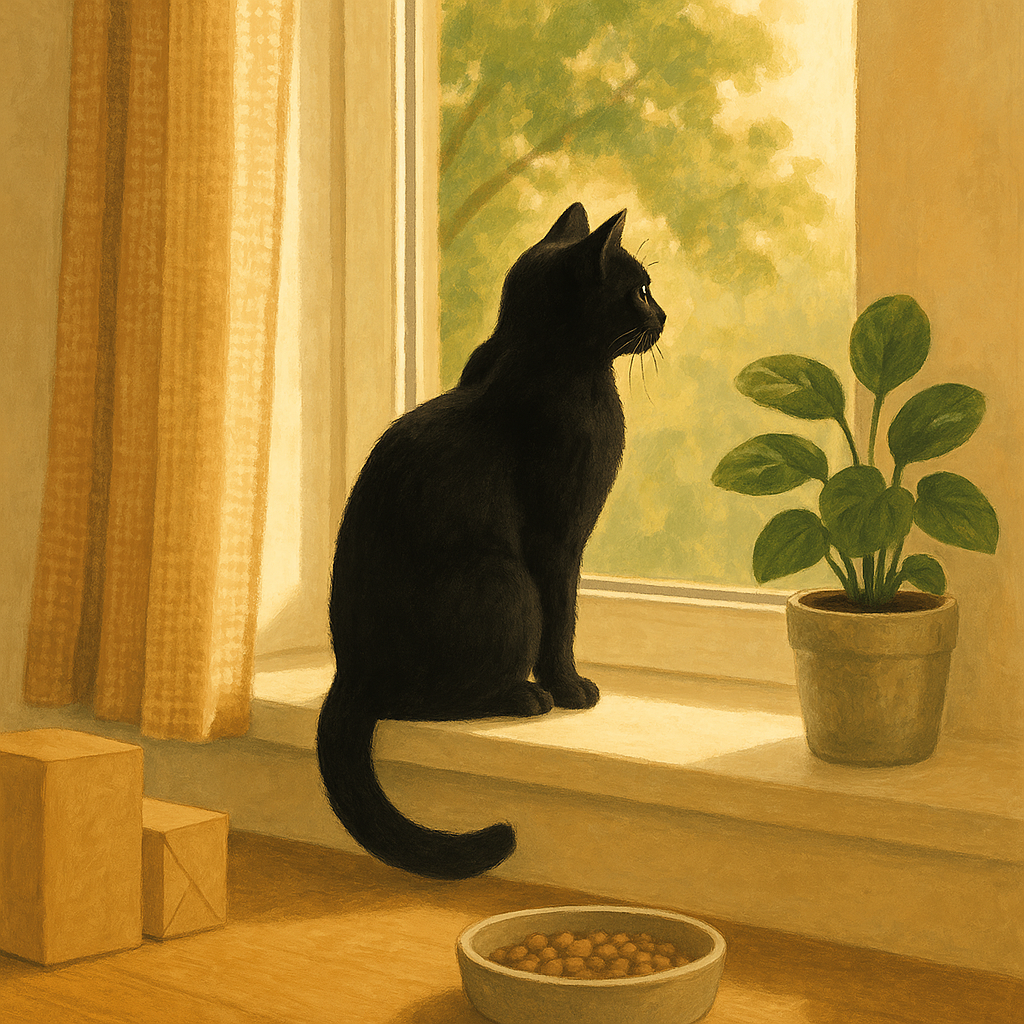
None of these five is wrong for every indoor cat. The value pick, the hairball-focused one, the low-calorie option, the grain-free high-protein bag and the one with real raw pieces mixed in are each solving a slightly different version of the same problem: matching what’s in the bowl to a life that mostly happens on a windowsill. Start with whichever badge above matches what your cat actually needs, not the one with the most flattering word on the bag.
Sources
- “Owner and Cat-Related Risk Factors for Feline Overweight or Obesity” (peer-reviewed, Frontiers in Veterinary Science, PubMed Central)
- Cornell Feline Health Center, “Obesity”
- Cornell Feline Health Center, “Feeding Your Cat”
TheCatWellness is reader-supported and we are not veterinarians. This article is general information, not medical advice for your individual cat. If your cat’s weight or appetite changes, talk to your vet.
More cat food guides
- The Best Kitten Foods: 3 Picks That Meet the Growth Standard
- Best dry foods for senior cats: the two real options
- The Best High-Protein Dry Cat Foods for Indoor Cats
- Royal Canin vs Hill’s Science Diet: which one fits your indoor cat?
- Instinct Raw Boost vs Blue Buffalo Wilderness: which grain-free kibble for your indoor cat?
- Stella & Chewy’s vs Primal freeze-dried: which raw food fits your indoor cat?
- Stella & Chewy’s Magical Dinner Dust Review: Does a Freeze-Dried Topper Fix a Picky Eater?
- The Quest cat food recall: what happened, and what I’d feed instead