What causes cat dandruff?
Most cat dandruff is dry air, dry skin or a cat who can’t groom her own back anymore. The seasonal version (white flakes that show up in winter and fade in spring) is almost always environmental. Year-round dandruff, or dandruff alongside itching, scabs or repeated grooming at one spot, is medical territory.
Quick fixes for the common causes:
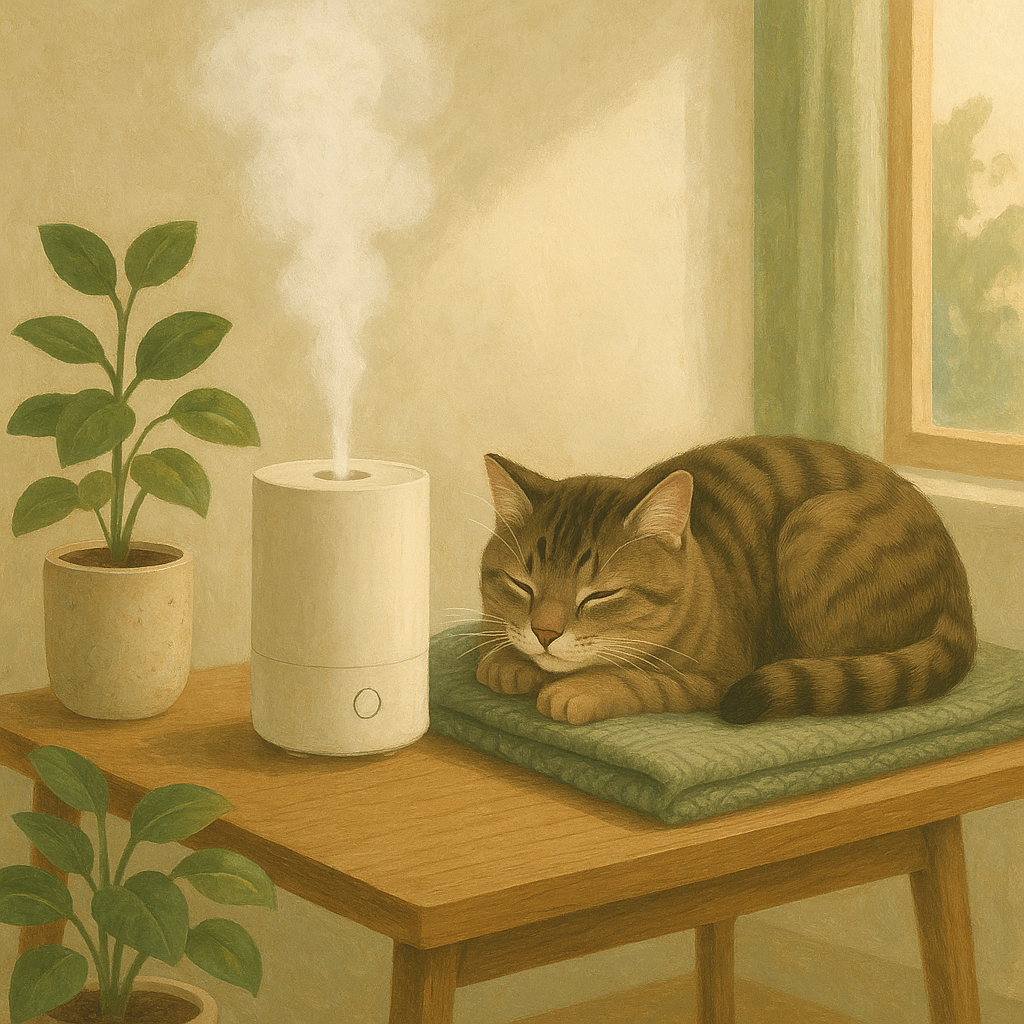
- Run a humidifier in the rooms the cat spends the most time in during heating season.
- Move toward more wet food in the diet. Canned is at least 75 percent water; kibble is 6 to 10.
- Brush regularly. Brushing distributes natural skin oils through the coat.
- For senior or overweight cats, brush the lower back and rump for them. They often can’t reach.
- Vet visit if dandruff is year-round, comes with itching or scabs or doesn’t improve in a few weeks.
Why cats get dandruff in winter
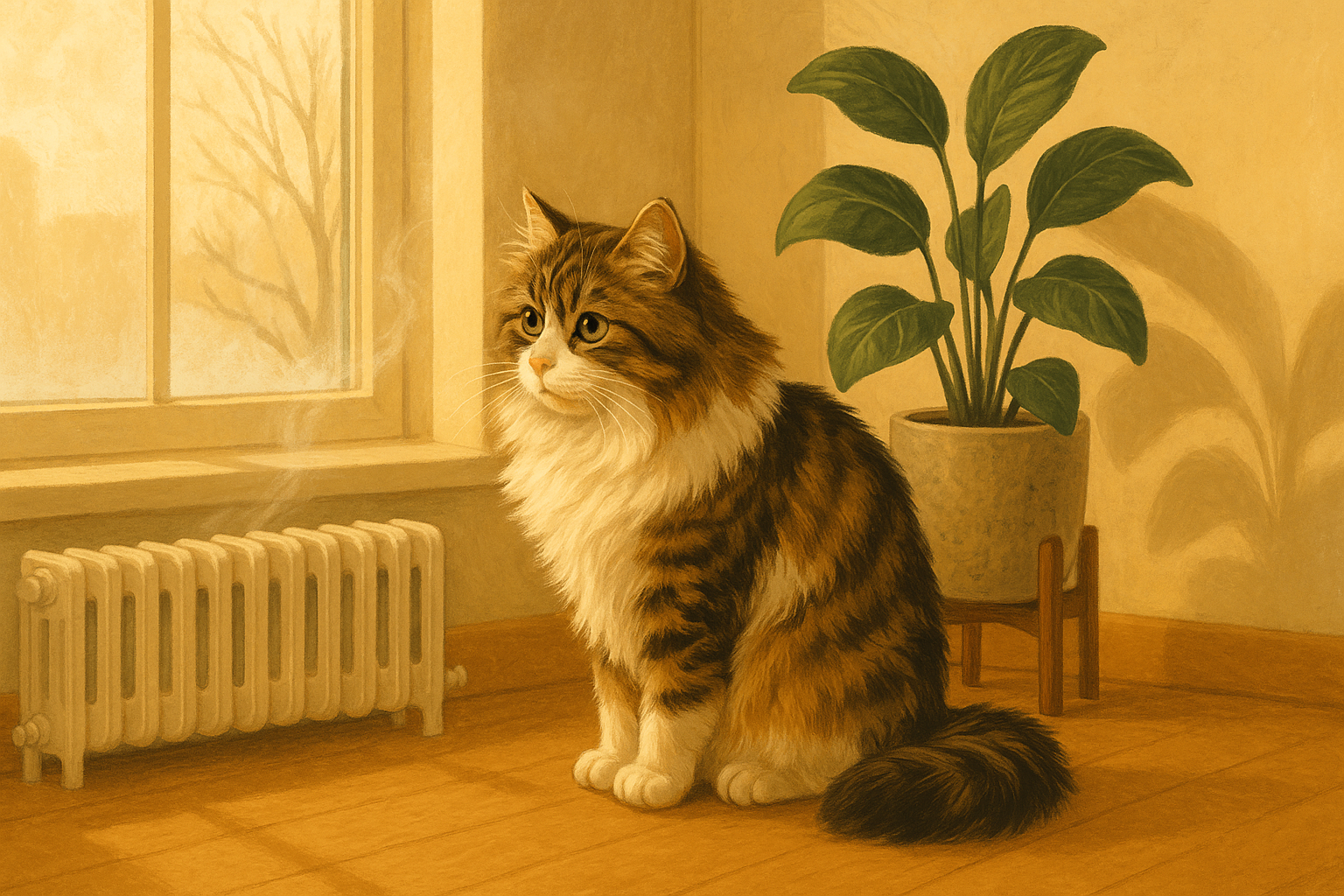
Indoor heating dries out the air, and the skin underneath the coat dries with it. The visible result is small white flakes on a dark coat, especially in long-haired cats and seniors. The same effect happens to human skin. The cause is environmental, and the fix is environmental: a humidifier brings the room’s relative humidity back into a normal range and the dandruff usually fades over a week or two. Cats living in homes with forced-air heating tend to see this more than cats in homes with radiator or steam heat.
When the cat can’t reach
The other common pattern in indoor cats is dandruff on the lower back, rump and tail base specifically. Cats normally distribute the natural oils in their skin throughout their coat via grooming, and a cat who can’t reach a part of her body stops distributing oils there. The skin in that area dries out, dandruff develops and sometimes the coat becomes greasy or matted alongside the flakes. The two populations this happens to most: senior cats with arthritis, who can’t twist the way they used to and overweight cats, who physically can’t reach the back half of their body. Brushing those areas for the cat does what she can’t do herself.
When dandruff is more than dry skin
Cornell flags flaky skin alongside other signs (scabs, open wounds, areas of redness) as the territory of allergy, parasite, fungal infection or other underlying conditions.1 Year-round dandruff that doesn’t seasonally improve is also a flag. Cheyletiella mites (sometimes called “walking dandruff” because the mites are visible) and flea allergy dermatitis can both look like dandruff at first glance. Food and environmental allergies can produce dry, flaky skin alongside itching. Ringworm, which is contagious to humans, sometimes presents as flaky patches before more obvious symptoms develop and Cornell flags it as both common and worth catching early.2
For the broader coat-and-skin picture, see our complete guide to indoor cat coat and skin health.
When to call the vet
- Dandruff that doesn’t seasonally improve, or year-round flakes
- Flakes alongside itching, scabs, redness or weepy skin
- Repeated grooming or scratching at one spot
- Bald patches or thinning hair alongside the flakes
- Dandruff plus visible weight loss, appetite changes or behavior changes
- Any dandruff in a kitten or young cat, where ringworm and parasites are more common