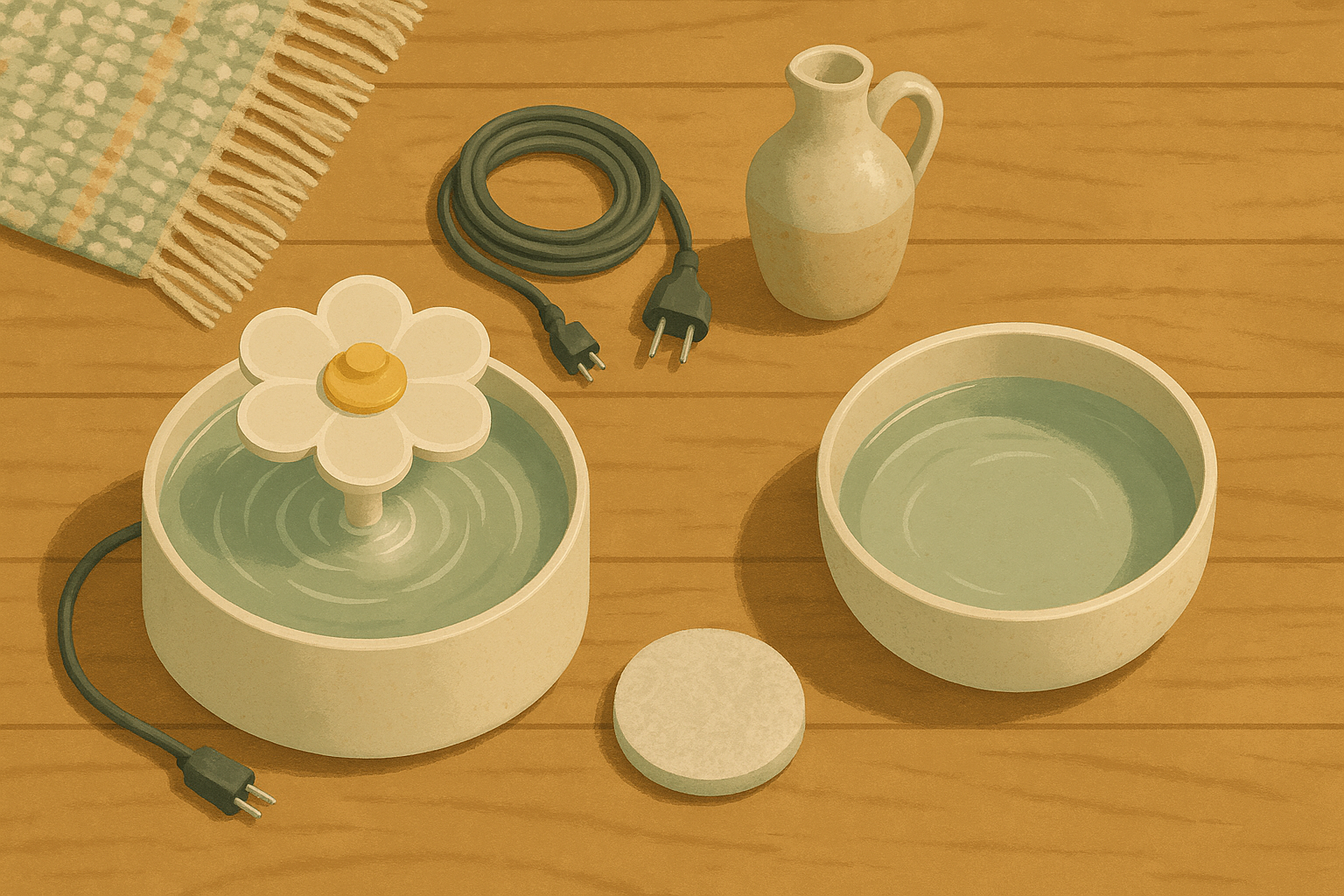
Cat water fountain vs water bowl: which does your indoor cat actually need?
Working intake at a small-animal clinic, I watched the same purchase happen on a loop. An owner worried their cat barely drank, read that a fountain fixes that and walked out of the pet store forty dollars lighter with a plug-in waterfall. Sometimes it helped. Often the cat ignored the fountain exactly the way it had ignored the bowl, and now there was a pump to clean. A fountain like the Catit Flower Fountain wins if your cat already chases moving water and you’ll keep the pump clean. A plain bowl wins for nearly everyone else. Here’s how to tell which situation you’re in, plus the one change that moves a cat’s water intake more than either piece of gear.
As Amazon Associates we earn from qualifying purchases. Some links in this post are affiliate links; if you buy through them, we earn a small commission at no extra cost to you. We only recommend products we’ve used or researched thoroughly. See our full disclosure.
Fountain or bowl, at a glance

Circulating water · three flow settings · compact footprint
- ✓ Moving stream appeals to cats drawn to the faucet
- ✓ 3 liters (about 100 oz), fewer refills than a bowl
- ✓ Adjustable flow for a noise-sensitive home
- ✓ Needs a filter change and a pump clean on a schedule
on Amazon

Wide shallow ceramic water bowl
No pump · heavy and stable · cheapest to run
- ✓ Non-porous glaze wipes clean in seconds
- ✓ Heavy base stays put while a cat laps
- ✓ Wide, shallow shape is gentle on whiskers
- ✓ Choose lead-free, retire it if the glaze chips
on Amazon

No pump · dishwasher-safe · near indestructible
- ✓ Smooth surface resists scratches and biofilm
- ✓ Holds no odor, nothing to leach into the water
- ✓ Dishwasher-safe and survives years of use
- ✓ A rubber base keeps a light bowl from sliding
on Amazon
| Fountain (Catit) | Ceramic bowl | Stainless bowl | |
|---|---|---|---|
| How it works | Pump circulates and filters the water | Still water, wipe-clean glaze | Still water, wipe-clean metal |
| Upkeep | Weekly pump clean, filter every 2 to 4 weeks | Daily refresh, occasional deep clean | Daily refresh, dishwasher-safe |
| Ongoing cost | Replacement filters plus a little power | None, short of replacing a chipped bowl | None, effectively free to run |
| Durability | Plastic body, pump wears over years | Can chip or crack if dropped | Resists denting, essentially indestructible |
| Best fit | A cat that’s drawn to moving or running water | A calm cat, a household that likes a soft look | A busy or multi-cat home that wants zero fuss |
The short version
- A fountain is a modest nudge, not a guarantee. The cleanest controlled study on this gave healthy cats a still bowl and a circulating fountain. They drank a little more from the fountain, but the increase was small and not statistically significant. [1]
- A clean, well-placed bowl is enough for most cats. If your cat already drinks fine from a fresh bowl, a fountain buys convenience and a happier moving-water cat, not better health.
- A fountain earns its keep with a specific cat: the one who runs to the tap, paws at still water or drinks more when the water moves. For that cat, the Catit Flower Fountain‘s moving stream is a real reason to visit the water.
- A bowl wins on simplicity. No pump to clog, no filter to buy and no 2 a.m. trickle. Between the two bowl picks here, the ceramic bowl is the softer, whisker-friendly option and the stainless bowl is the one you can’t chip or crack.
- The real lever is neither one. Wet food is roughly three-quarters water and raises a cat’s intake without relying on them choosing to drink. Pair that with a couple of water stations away from the food and litter. [2][3]
In this guide
What the evidence actually says · When a fountain earns its place · When a bowl is the smarter buy · The lever that beats both · So, which should you buy? · How I compared them · Common questions · When to talk to your vet
What the evidence actually says
It’s tempting to assume moving water must work, because the faucet trick fools so many of us. The research is more reserved. The best controlled study on water source compared healthy cats drinking from a still bowl against a circulating fountain and measured both how much they drank and how concentrated their urine was. The cats drank slightly more from the fountain, but the difference was small and fell short of statistical significance, and their urine concentration didn’t meaningfully shift either. [1] In plain terms, the fountain didn’t reliably move the numbers that matter.
That doesn’t make a fountain useless. Averages hide the individuals, and plenty of owners report a cat who genuinely drinks more once the water moves. What the study should do is lower your expectations and change how you shop. A fountain is worth trying as an experiment for a particular cat, not as a health upgrade every cat needs. Buy one expecting it to cure a cat who barely drinks and you’ll likely end up disappointed and out the cost of the fountain.
When a fountain earns its place
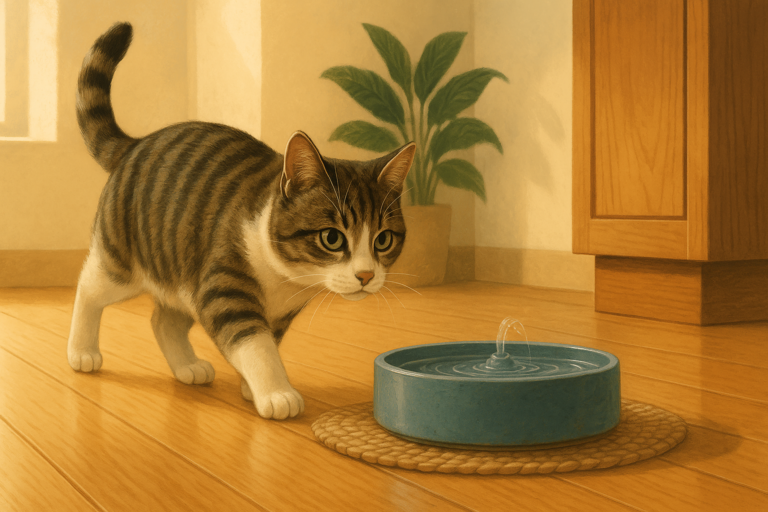
There’s a clear profile of cat a fountain suits. If yours bats at the water, drinks from your glass, ignores a full dish but mobs the running tap, the moving stream gives it the freshness and motion it’s already telling you it wants. A fountain also keeps a larger volume of water circulating and aerated, which stays palatable longer than a bowl that goes flat and dusty within hours. For a single cat in an apartment, a compact model like the Catit Flower Fountain holds about 100 ounces and runs three flow patterns, so you can dial the stream down to a quiet bubble for a noise-shy cat. That adjustability is the feature I’d weigh most, because a fountain that annoys you at night is a fountain you’ll unplug, and an unplugged fountain hydrates nobody.
The catch with every fountain is upkeep, and it’s the part owners underestimate. A pump pulls hair and food slime into the impeller, the flow drops, a film builds on the wet plastic and the water starts to smell off to a cat long before it does to you. That smell is the very thing that puts a fussy drinker off. A fountain only beats a bowl if you commit to a weekly pump clean and a filter change every two to four weeks. If that schedule sounds like one more chore you won’t keep, the honest answer is that a bowl will serve your cat better.
When a bowl is the smarter buy
For a lot of cats, a plain bowl is not a compromise. It’s the right tool. If your cat already drinks willingly from fresh water, a fountain adds cost and maintenance without adding health. A wide shallow ceramic bowl or a stainless steel bowl has no motor to fail, nothing to clog and no replacement filters to buy, and either one wipes clean in seconds. The trade-off cuts the other way too: still water goes stale fast, so a bowl asks you to refresh it daily rather than clean a pump weekly. Pick your chore.
Between the two bowl materials, the honest answer is that they solve slightly different problems. A stainless steel bowl is close to indestructible: it won’t chip, it resists scratches and it goes in the dishwasher without a second thought, which matters most in a busy or multi-cat home where the bowl gets knocked around daily. A ceramic bowl gives up some of that toughness (a hard drop can chip the glaze) but tends to come in wider, shallower shapes that are gentler on a cat’s whiskers, and its weight keeps it planted while a cat laps. Neither is wrong. Pick steel if durability is the priority, ceramic if shape and a softer look matter more to you.
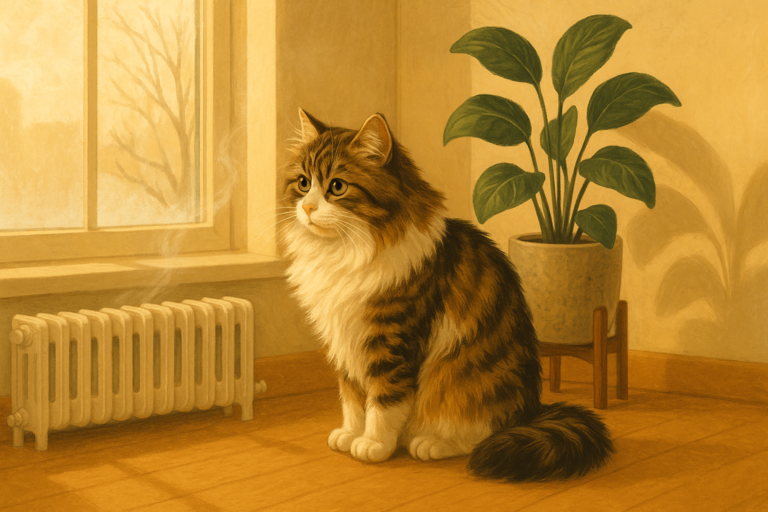
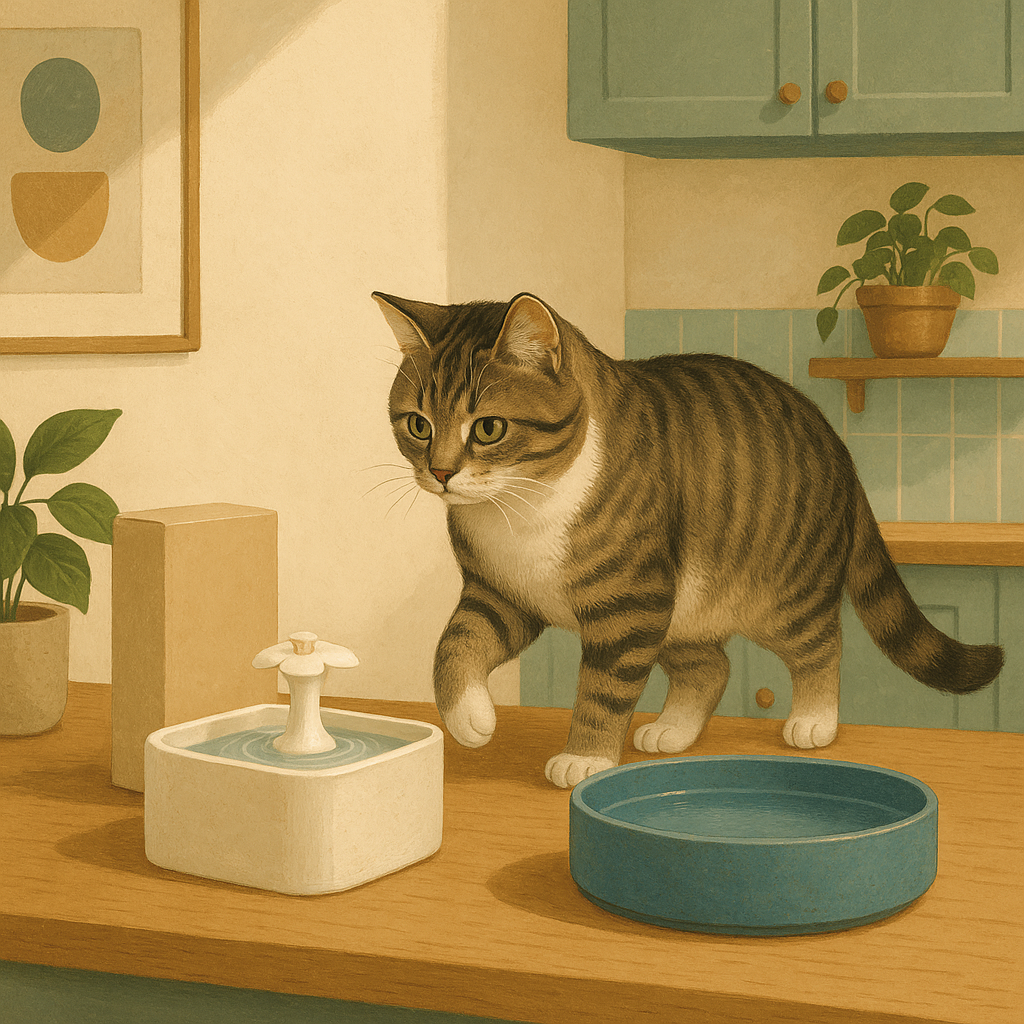
Placement is where a bowl quietly wins or loses, and it’s free. At the clinic the most common “my cat won’t drink” case wasn’t a cat who needed a fountain. It was a bowl parked beside the food or next to the litter box, which a cat’s instincts tell it to avoid. Cornell notes that cats are deterred from eating and drinking by heavy traffic, noise and a nearby litter box. [3] Move that same bowl to a calm corner with clear sightlines, refresh it daily and add a second station in another room, and a lot of “fountain problems” solve themselves for the price of nothing. In a multi-cat home, spreading bowls out so a shy cat never gets blocked from water matters more than the vessel it drinks from.
The lever that beats both
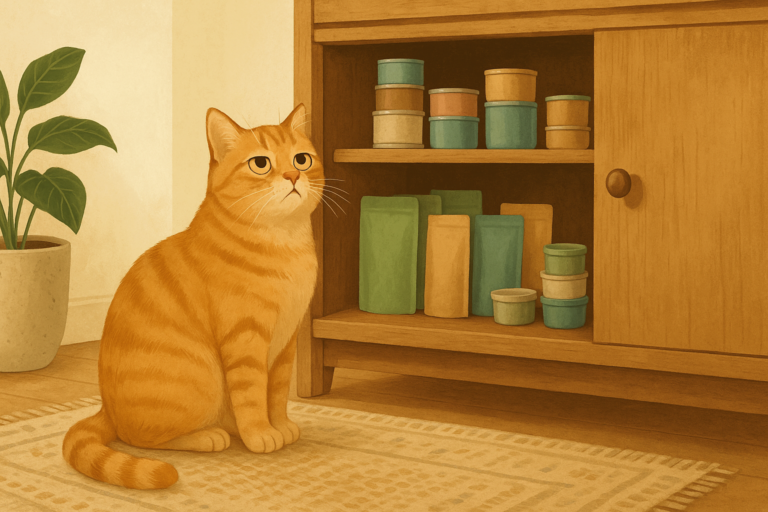
Here’s the thing the fountain-versus-bowl debate misses. Cats evolved from desert animals with a low thirst drive, built to draw most of their water from prey rather than a dish, which is why so many indoor cats look like light drinkers. [3] The single biggest hydration lever isn’t the container. It’s the food. Canned and other wet foods are roughly three-quarters water, so feeding wet pulls a cat’s daily intake up without relying on it deciding to visit a bowl or a fountain at all. [2] If you do one thing for a cat you think drinks too little, make it wet food, then treat the bowl or fountain as the supporting act.
So, which should you buy?
Buy the Catit Flower Fountain if your cat shows you it loves moving water and you’ll keep the pump clean. It’s the easy starting point for one cat in an apartment: compact, quiet on its lowest setting and cheap to run. Buy the ceramic bowl or the stainless bowl if your cat drinks fine already, if motor noise is a dealbreaker or if you’d rather not babysit a pump, and lean stainless specifically if the bowl needs to survive a busy household. Either way, the gear is the smaller decision. Offer wet food, set the water somewhere calm and well away from the litter box, give it a second station and watch whether your cat’s habits shift over a couple of weeks. [2][3] That’s the part that moves the needle.
How I compared them
This is a researched comparison, not a side-by-side test in my own home, so I won’t claim I ran a fountain and a bowl on the same counter for a month. What I did do is read the Grant (2010) study on water source and intake closely rather than skim the headline finding, line up the manufacturer specs for the Catit Flower Fountain and both bowls, and check current listings across more than one non-Amazon retailer (Chewy and Petco put the Catit in the high-$20s to mid-$30s depending on the exact model, list price around $33). That check is what surfaces the concession worth naming plainly: a fountain costs several times what either bowl does and keeps costing you filters and a little electricity for as long as you own it, while a bowl is close to free to run once you’ve bought it. That’s a real, ongoing advantage for the bowl, not a minor one. Going the other way, the fountain‘s moving, filtered water is a genuine draw for a cat that’s already told you it prefers running water over still, and no bowl replicates that. Where the two paths are functionally tied, like how quickly either one goes stale-smelling without regular cleaning, I’ve said so instead of manufacturing a difference. I weighed all of that against years of intake-desk conversations where the questions were almost always the same: will my cat drink from it, and what am I signing up to clean.
Common questions
Do fountains lower the risk of kidney or urinary problems?
No study shows that directly. A fountain may nudge a cat toward drinking a bit more, but wet food and where you put the water do more for daily intake, and any real change in thirst or urination belongs in front of a vet, not a buying decision. [1][4]
How often does a fountain need cleaning?
Plan on a full pump clean weekly and a filter swap every two to four weeks. A fountain that’s overdue is the most common reason the flow drops or the water starts smelling.
Is ceramic or stainless steel better for a cat prone to chin breakouts?
Both can work if you keep them clean and free of chips or scratches. A chipped ceramic glaze or a scratched surface gives bacteria somewhere to hide, so a smooth, undamaged bowl of either material matters more than the material itself.
Can I run a fountain and a bowl at the same time?
Yes, and for a multi-cat home it’s often the better setup. Keep the old bowl out while a cat gets used to a new fountain rather than switching cold, and a second water station away from the fountain gives a cat options if it’s ever unplugged for cleaning.
When to talk to your vet
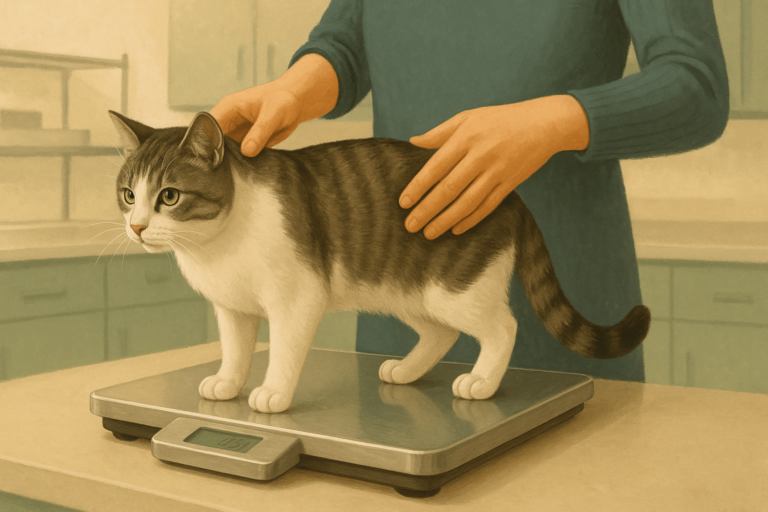
A fountain or a bowl is for a healthy cat who simply drinks less than you’d like. Neither is the answer to a sudden change. If your cat starts drinking a lot more than usual, or abruptly drinks much less, call your vet rather than reaching for a new gadget, because a real shift in thirst can be an early sign of kidney disease, diabetes or an overactive thyroid. [4] The same goes for straining in the litter box, a sharp change in how often it urinates or signs of dehydration like tacky gums or skin that’s slow to settle when you gently lift it. [3] Those belong in an exam room, not a buyer’s guide. The right water setup supports a cat who’s well. It doesn’t diagnose one who isn’t.
The bottom line
- Choose the Catit Flower Fountain if your cat already chases moving water and you’re willing to keep the pump clean on a schedule.
- Choose the stainless bowl if your cat drinks fine already and you want the lowest-maintenance, most durable option for a busy or multi-cat home.
- Choose the ceramic bowl if your cat drinks fine already and you’d rather have a wider, softer-looking dish and don’t mind handling it gently.
The controlled evidence says a fountain’s average effect on intake is modest at best, so don’t buy one expecting a cure. [1] Spend your effort where it pays off: wet food and where the water lives, and let the fountain or bowl be the easy supporting choice it should be.
Sources
More hydration guides
- Indoor cat hydration: what actually works
- Catit Flower Fountain vs PetSafe Drinkwell Platinum: which fountain fits your cat?
- The Best Cat Water Fountains Under $50
- Ceramic vs stainless steel vs plastic: the cat water bowl that actually stays clean
- Best Ceramic Water Bowls for Whisker-Sensitive Cats
- Indoor cat kidney disease: how to lower the risk and catch it early