Ceramic vs stainless steel vs plastic: the cat water bowl that actually stays clean
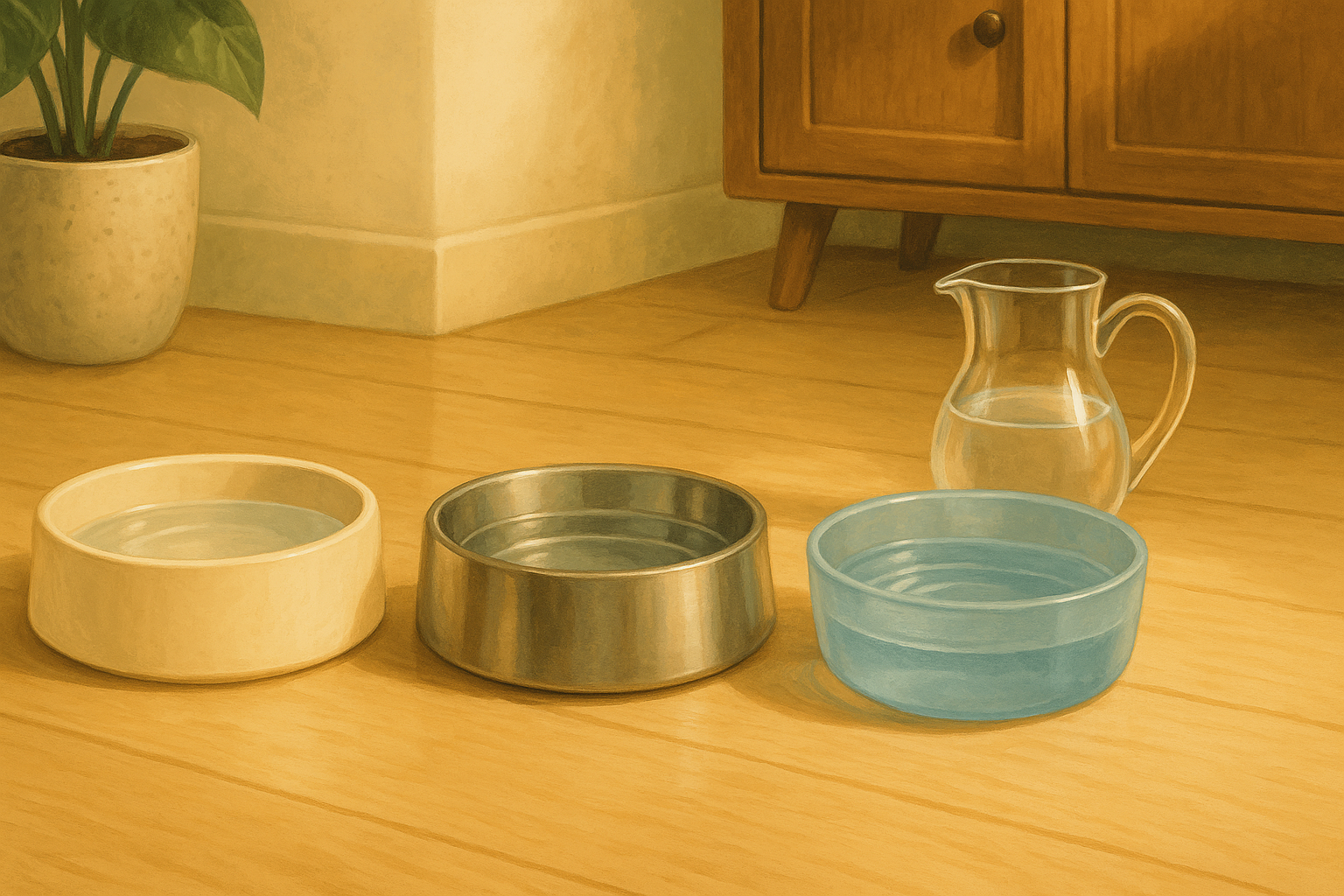
The water bowl is the cheapest piece of gear in the house, so it’s the one nobody thinks about until something goes wrong. At the clinic intake desk I lost count of the owners who came in worried about little black flecks on their cat’s chin, sure it was dirt that wouldn’t wash off. Often it wasn’t dirt at all. It was the bowl. A stainless steel bowl wins if you want something you never have to think about again. A ceramic bowl wins if your cat needs a wider, calmer shape to drink from. Plastic only wins on price, and even that edge disappears the day it scratches.
As Amazon Associates we earn from qualifying purchases. Some links in this post are affiliate links; if you buy through them, we earn a small commission at no extra cost to you. We only recommend products we’ve used or researched thoroughly. See our full disclosure.
How the materials compare at a glance

Non-porous · dishwasher-safe · near indestructible
- ✓ Smooth surface resists scratches and biofilm
- ✓ Holds no odor, no leaching worries
- ✓ Look for a wide shallow shape with a rubber base
on Amazon
Price as of Oct 26, 2026, 9:21 AM EDT. Product prices and availability are accurate as of the date/time indicated and are subject to change.

Ceramic cat bowl (wide and shallow)
Heavy and stable · easy wide shapes · pleasant to drink from
- ✓ Non-porous glaze wipes clean
- ✓ Weight keeps it from sliding while a cat laps
- ✓ Choose lead-free and retire it if the glaze chips
on Amazon
Price as of Oct 26, 2026, 9:21 AM EDT. Product prices and availability are accurate as of the date/time indicated and are subject to change.
| Ceramic | Stainless steel | Plastic | |
|---|---|---|---|
| Surface | Glazed and non-porous, wipes clean | Non-porous metal, wipes clean | Porous once scratched, holds bacteria |
| Weight and stability | Heavy, stays put while a cat laps | Light unless it has a rubber base | Light, slides easily on hard floors |
| Durability | Can chip or crack if dropped | Resists dents, essentially indestructible | Survives drops, but scratches with use |
| Ongoing cost | None, short of replacing a chipped bowl | None, effectively free to run | None, but budget on replacing it once scratched |
| Best fit | A cat that paws at or dislikes a deep bowl | A busy or multi-cat home that wants zero fuss | A tight budget, replaced on a set schedule |
The short version
- Cleaning beats material. The best controlled study on bowl hygiene found that how often and how you wash the bowl mattered more than what it was made of. A dishwasher cycle left fewer bacteria than a quick hand rinse. [1]
- Plastic earns its bad reputation in one specific way. It scratches, and the porous scratched surface is linked to feline chin acne. The standard vet fix is to switch to a smooth non-porous bowl and wash it daily. [2]
- Stainless steel is the low-fuss default. A stainless steel bowl doesn’t scratch easily, holds no odor, survives the dishwasher and lasts for years. The trade-off is that some cats are wary of a noisy lightweight metal bowl.
- Ceramic is the comfort pick. A ceramic bowl is heavy, stable, easy to find in a wide shallow shape and pleasant for cats who dislike a deep narrow bowl. Check that it’s labeled lead-free and replace it if the glaze ever chips.
- The bigger hydration lever isn’t the bowl at all. Cats have a low thirst drive, so wet food and water placement move the numbers more than any bowl swap. [3][4]
In this guide
What the research says · Where plastic genuinely falls down · Stainless steel: the boring, reliable choice · Ceramic: comfortable and easy to find in the right shape · The habit that beats every material · So which should you buy? · How I compared them · Common questions · When to talk to your vet
What the research actually says about bowl material
Start with the part that surprises people, because it reframes the whole question. A 2023 study in BMC Veterinary Research sampled real food bowls from people’s homes and measured the bacteria on them. The researchers compared plastic against metal, looked at wet food versus dry and compared cleaning methods. The headline finding wasn’t that plastic was filthy. Bacterial counts were higher on the metal bowls than the plastic ones, and higher again on bowls used for wet food. The thing that cut contamination most was the cleaning method: bowls run through a dishwasher came out cleaner than bowls washed by hand. [1]
Two caveats keep that honest. The study looked at dog bowls for the lab measurements, and the authors are upfront that nobody has run the same test on cat bowls yet, so this is the closest evidence we have rather than a direct answer. It also measured general bacteria, not the specific problem plastic is known for. The practical lesson travels well to cats regardless: the material you pick is a smaller factor than whether you wash the bowl often and wash it properly. A spotless plastic bowl beats a grimy steel one. If you take one thing from this piece, take that.
Where plastic genuinely falls down
Plastic does have a real, documented weakness, and it’s narrower than the internet suggests. Soft plastic scratches with everyday use, and those micro-scratches give bacteria a place to settle that a sponge can’t fully reach. Veterinary dermatology links plastic food and water dishes to feline chin acne for exactly this reason: the irregular surface holds bacteria against the skin of the chin, the hair follicles get inflamed and you end up with those stubborn black specks and the occasional sore bump. [2]
The cat I mentioned at the top is the textbook case. The owner had a cheap plastic water dish that had been in service for a couple of years, scuffed cloudy on the inside. The vet’s advice was the standard one: move to a smooth non-porous bowl, glass, ceramic or stainless, and wash it every day. [2] For plenty of cats that single swap clears the chin up without anything else. Plastic isn’t dangerous in some dramatic way. It just ages badly, and an old scratched plastic bowl is the one material problem here that’s worth avoiding. If you do stick with plastic, replace it when it looks worn rather than running it for years.
Stainless steel: the boring, reliable choice
If someone at the desk asked me for the safe default with no caveats to memorize, I’d point at a stainless steel bowl. It’s non-porous, so it doesn’t scratch into a bacterial trap the way plastic does. It shrugs off odor, it doesn’t leach anything into the water and it goes in the dishwasher, which the research suggests is the cleaning method that matters. [1] A decent steel bowl outlasts every other option in the house. It’s the one piece of cat gear you can genuinely buy once.
The honest downsides are small. A lightweight steel bowl can skate across the floor and clatter while a cat drinks, and a noise-sensitive cat may back off, which is a real consideration in a hard-floored apartment. The fix is cheap: pick a heavier gauge bowl, or one with a rubber ring on the base to keep it quiet and planted. A few cats also dislike seeing their own reflection move in the water, though most never seem to register it. None of that outweighs the upkeep advantage for most homes.
Ceramic: comfortable, stable and easy to find in the right shape
A ceramic bowl is the pick I reach for when the issue is comfort rather than hygiene. A glazed ceramic bowl is non-porous and wipes clean as easily as steel, and the weight is the selling point: it stays put while a cat laps instead of wandering across the kitchen. Ceramic also comes in wide shallow shapes more readily than the other materials, which suits cats who paw at the water or back away from a deep narrow bowl. The idea that a deep bowl tires a cat’s whiskers is talked about with more certainty than the evidence supports, so I won’t oversell it, but a wide low dish is a sensible, low-cost thing to try for a fussy drinker and ceramic makes that shape easy to find.
Ceramic has two things to watch, and the first one deserves more caution than a quick label check. Cheap or imported glazes can contain lead, and the FDA’s own testing has repeatedly found imported ceramicware leaching extractable lead above its own action levels, including pieces printed with a “lead-free” claim, because the lead sits in the glaze and migrates out when the bowl holds anything acidic. [5] Buying a bowl labeled lead-free and food-safe is still the right move, and one made in the US or from a brand that publishes third-party testing is a stronger bet than an unbranded import. Second, the glaze is the protection. Once it chips or develops a crazed network of fine cracks, the exposed surface underneath can harbor bacteria much like scratched plastic, so a chipped bowl should be retired, not nursed along. Treat the glaze as the whole point and ceramic is an excellent, cat-pleasing option.
The habit that beats every material
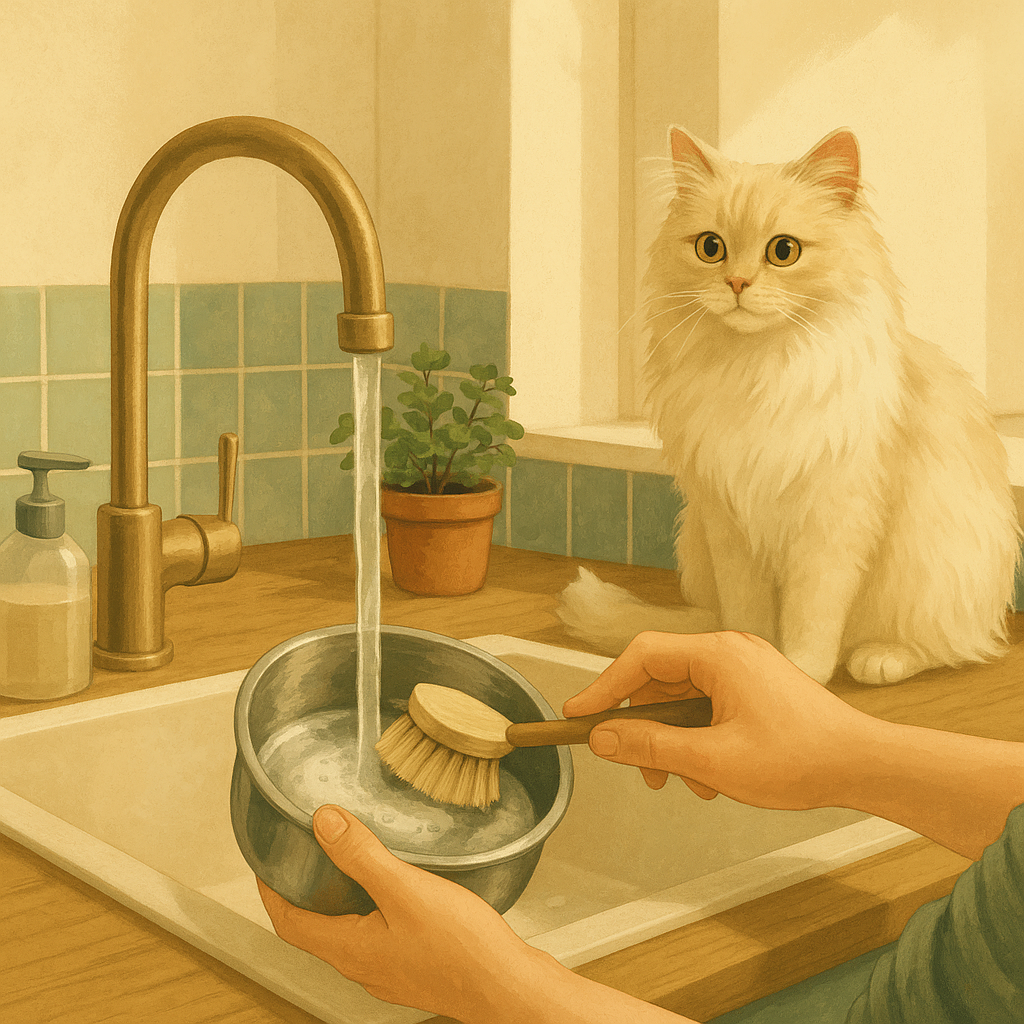
Whatever bowl you land on, the routine is what keeps your cat drinking. Water bowls grow a slick, faintly slimy film called biofilm within a day or two, and a cat’s nose catches that long before your eyes do. A bowl that smells off to a cat is a bowl they’ll avoid, and avoiding water is the last thing you want from an animal built to run a little dry. [3] So wash the bowl daily with soap and hot water, or run it through the dishwasher, which the bowl research backs as the more thorough option. [1] Refill with fresh water rather than topping up the old. Give it a deeper scrub a couple of times a week to break down any film that’s starting to build.
And keep the bowl in perspective. Cats evolved from desert animals with a low thirst drive, so they’re built to pull most of their water from prey rather than a dish. [3] The levers that raise a cat’s intake are feeding wet food, which is roughly three-quarters water, and offering more than one water station set away from the food and the litter box. [4] A clean bowl in a good spot supports all of that. It just isn’t, on its own, the thing that fixes a cat who barely drinks.
So which should you buy?
For most indoor cats I’d start with a stainless steel bowl for its sheer durability and the way it laughs off the dishwasher, then add a heavier base or a rubber ring if the noise bothers your cat. If your cat is a messy or reluctant drinker, or you want a wide shallow shape that stays put, a lead-free ceramic bowl is just as hygienic and often more comfortable. Plastic is fine in a pinch if you wash it daily and replace it the moment it looks scratched, but it’s the one material with a specific downside, so it’s not where I’d start. The best bowl is the smooth non-porous one you’ll clean every day, without fail. The label on the bottom matters far less than the sponge in your hand.
How I compared them
This is a researched comparison, not a lab test I ran myself, so I won’t claim I cultured bacteria off three bowls in my own kitchen. What I did do is read the Morelli bowl-hygiene study past the headline, pull the FDA’s own guidance on lead in ceramicware, and check current listings across more than one non-Amazon retailer. Petco and Chewy price a basic stainless bowl around $6 to $10, a comparable glazed ceramic saucer lands in roughly the same $7 to $10 band, and Walmart’s plastic dishes run anywhere from about $5 to $15 depending on size and brand, which means plastic’s price edge is smaller than its reputation suggests once you’re comparing similar sizes rather than the cheapest option in each material. That pricing check is also what surfaces the concession worth naming plainly: plastic is the lightest and most drop-proof of the three, which is a real advantage in a home with kids, dogs or a cat that knocks bowls around, as long as you’re disciplined about replacing it before it scratches. Going the other way, a ceramic bowl‘s comfort and shape advantage comes with a caveat stainless steel doesn’t carry: verifying that the glaze is genuinely lead-safe takes more than trusting a label, since the FDA has found “lead-free” imports that weren’t. [5] Where two materials are functionally tied, like the fact that either ceramic or stainless wipes clean in seconds once it’s undamaged, I’ve said so instead of manufacturing a difference. I weighed all of that against years of intake-desk conversations where the question was almost always the same: is this bowl making my cat’s chin worse, and how much am I signing up to clean.
Common questions
Is plastic actually dangerous for cats?
Not in a dramatic sense. The documented issue is narrow: scratched plastic holds bacteria against a cat’s chin and that’s linked to feline chin acne. A smooth, unscratched plastic bowl washed daily is a much smaller risk than an old, scuffed one. [2]
How do I know a ceramic bowl is lead-safe?
A “lead-free” label is a starting point, not a guarantee. Favor a bowl from a brand that publishes third-party testing or is made domestically, and retire any glazed bowl the moment it chips, since a damaged glaze can no longer do its job either way. [5]
Do I need a special bowl to fix whisker fatigue?
The evidence for “whisker fatigue” as a defined condition is thinner than the marketing around it. A wide, shallow bowl is still worth trying for a cat that paws at its water or seems reluctant to dip its face in deep, but treat it as a low-cost experiment rather than a diagnosed fix.
How often should I replace a cat bowl?
Ceramic and stainless can last for years as long as the surface stays smooth. Retire either one the moment the glaze chips or the metal develops a deep scratch. Plastic ages faster and is worth replacing every several months to a year, sooner if it looks cloudy or scuffed.
When to talk to your vet
A bowl swap is for everyday comfort and hygiene, not for a cat whose drinking has changed. If your cat suddenly starts drinking a lot more or a lot less than usual, book a vet visit rather than blaming the dish, because a real change in thirst can be an early sign of kidney disease, diabetes or an overactive thyroid. [4] If the black flecks on the chin turn into swollen, red or draining bumps, or your cat is scratching at them, that’s chin acne that has gotten infected and it’s worth a call too, since some cases need a medicated wash your vet has to prescribe. [2] The bowl is the easy first move. It isn’t a substitute for an exam when something looks different.
The bottom line
- Choose the stainless steel bowl if you want the lowest-maintenance, most durable option and your cat isn’t bothered by a lightweight metal dish.
- Choose the ceramic bowl if your cat wants a wider, heavier, more stable dish, and you’re willing to buy from a brand you trust on lead safety and retire it if it chips.
- Stick with plastic only if budget is tight and you’ll commit to washing it daily and replacing it the moment it scratches.
None of the three materials beats a bowl you keep clean, day in and day out. Pick the one that fits your cat and your budget, then let the habit do the rest of the work.
Sources
- Morelli, G. et al. (2023). “Pet feeding habits and the microbiological contamination of dog food bowls: effect of feed type, cleaning method and bowl material.” BMC Veterinary Research
- VCA Animal Hospitals, “Chin Acne in Cats”
- Cornell Feline Health Center, “Hydration”
- Cornell Feline Health Center, “Feeding Your Cat”
- U.S. Food and Drug Administration, “Questions and Answers on Lead-Glazed Traditional Pottery”
More hydration guides
- Indoor cat hydration: what actually works
- Cat water fountain vs water bowl: which one actually gets your cat drinking?
- Catit Flower Fountain vs PetSafe Drinkwell Platinum: which fountain fits your cat?
- Best Ceramic Water Bowls for Whisker-Sensitive Cats
- Indoor cat kidney disease: how to lower the risk and catch it early