New kitten checklist: what first-time owners need to do first
Between the two of us, we’ve handed a lot of kittens across a shelter counter to first-time owners, and the look on their faces is almost always the same. Pure delight, chased about three seconds later by a flicker of panic. What do I feed it? When does it need a vet? Is my apartment even safe for something this small? Here’s the reassuring part: the kitten is the easy bit. Kittens are resilient, curious and quick to forgive a rookie mistake. It’s the owner who needs the checklist, and it’s shorter than the internet makes it look.
This is the order we’d actually do things in, from the day before your kitten comes home through the first few months. Most of it is simple. A couple of items are time-sensitive in ways that surprise people, so we’ve flagged those.
The short version
- Before pickup: a litter box (two, even for one kitten), kitten food, food and water dishes, a scratching post, a carrier and one quiet room set up as a home base.
- First week: book a vet visit right away, keep the kitten separate from any resident cats until that exam, and start gentle daily handling.
- The vaccine clock: the kitten series runs every three to four weeks until about 16 to 20 weeks old, so the first appointment sets the schedule.
- By five months: spay or neuter, the age most vet groups now recommend.
- Ongoing: a complete kitten diet fed several times a day, an indoor setup built for climbing and play, and a kitten-proofed space.
- Socialization is the quiet priority. The window for shaping a confident adult cat is already closing when the kitten arrives, so the first weeks matter more than they look.
A first-timer who stops reading here still has the map. The rest is the why behind each item, and the two or three places new owners tend to trip.
Before the kitten comes home: set up the room, not the whole house
The classic first-timer instinct is to give a new kitten the run of the place. Do the opposite. A single quiet room, a bathroom or a spare bedroom, is far less overwhelming for a small animal that just left its mother and littermates. Set it up before pickup so you’re not scrambling. You’ll want a litter box, food and water dishes kept well away from that box so the food doesn’t get contaminated, a scratching post and a soft bed or a cardboard box with a towel.1
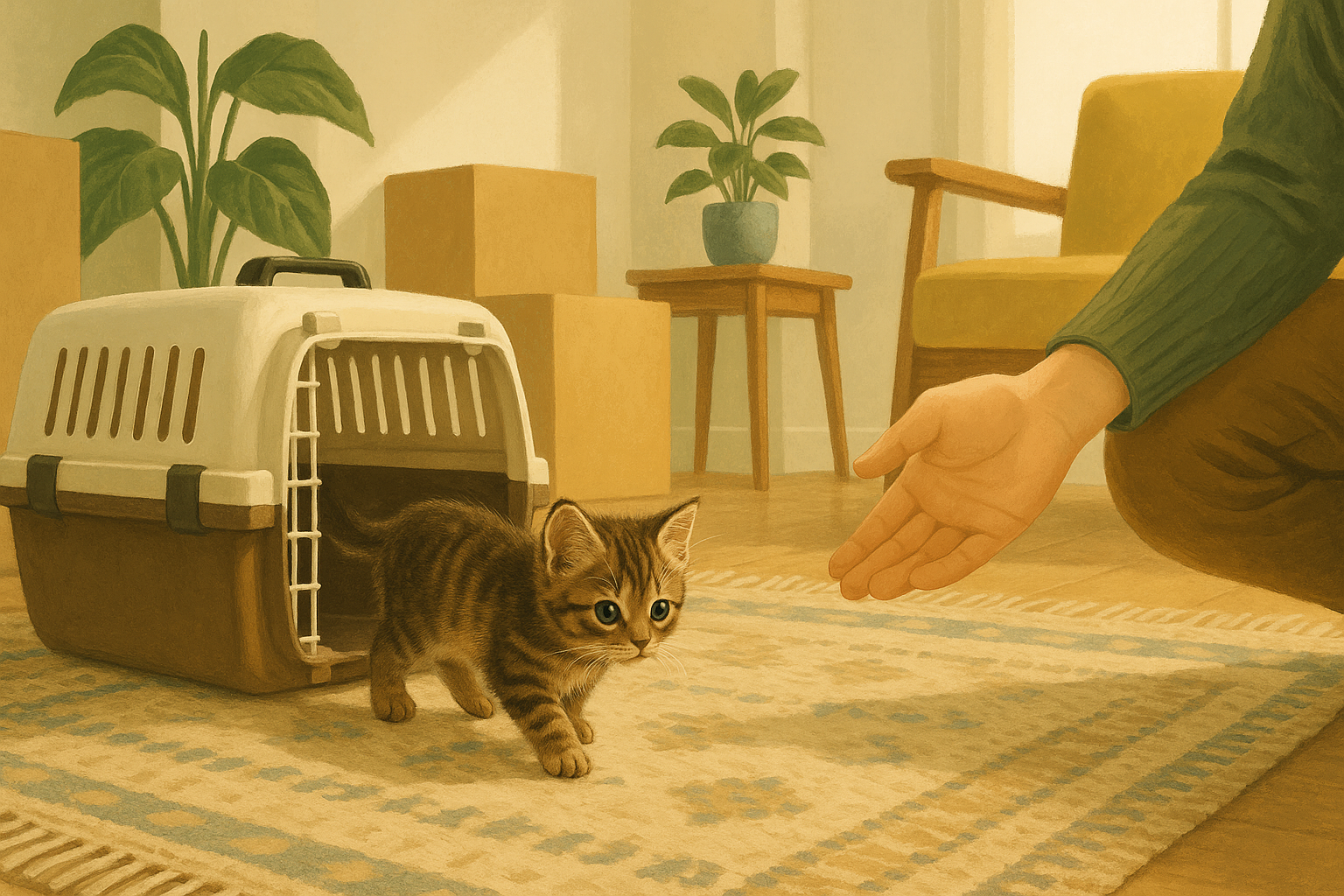
On the litter box, the rule we give everyone is one box per cat plus one, so even a single kitten does best with two. Kittens and older cats want low sides they can climb over easily, and most cats prefer a simple uncovered box with fine, unscented litter.1 Buy a carrier too, and leave it open in the room with a treat inside from day one. A carrier that only appears on vet day becomes a monster. A carrier that doubles as a napping spot makes the next decade of appointments easier. If you’re bringing a kitten into a home that already has a cat, keep the newcomer in that separate room until your vet has examined it, especially if you don’t know its health history.1
Book the first vet visit right away
Any new cat should see a veterinarian as soon as possible after coming home, and with a kitten that visit does double duty.1 It’s the health check, and it’s the start of the schedule that runs for the next few months. Ask the breeder, shelter or rescue what the kitten has already had: any vaccinations, deworming, food and prior care. Bring that record. If there’s no history, your vet will likely test for feline leukemia virus and feline immunodeficiency virus, check for intestinal worms and look for fleas, ticks and mites, all of which are common in kittens and all of which are treatable.1
Use that appointment for something the guidelines are clear about and most owners never hear: it’s a training session, not just a physical. Kittens who get gentle, food-paired first experiences at the clinic are far less likely to become the yowling, terrified adult cat in the waiting room. Ask your vet’s team to go slow, and bring the kitten hungry so treats land.2
The vaccine and deworming clock
This is the item first-timers most often underestimate, because it isn’t one shot. The core combination vaccine, usually called FVRCP, protects against feline panleukopenia and two common respiratory viruses. The first dose is generally given at six to eight weeks, then repeated every three to four weeks until the kitten is about 16 to 20 weeks old.1 That series matters: a single early shot doesn’t finish the job, and skipping the later boosters leaves a gap right when a kitten’s own immunity is taking over. Rabies is the other core vaccine, given once at around eight to twelve weeks depending on the product and required by law in many states.1
Practically, that means three or four vet visits in your kitten’s first few months, spaced a few weeks apart. Put them in your calendar at the first appointment. Your vet will also set up a deworming and parasite-prevention plan on the same visits, and will talk through any non-core vaccines that fit your kitten’s situation. Indoor-only life lowers some risks, but kittens still need the core series regardless of whether they’ll ever set foot outside.
Spay or neuter by five months
The old rule of thumb was six months. The current recommendation, endorsed by the major veterinary and feline groups, is to spay or neuter by five months of age.3 The reasoning is practical. Female cats can become pregnant by around five months, so waiting risks a surprise litter, and spaying before that first cycle sharply reduces the later risk of mammary cancer, which in cats is usually malignant.3 The surgery is also faster and easier on a younger cat, with quicker recovery and no evidence of the harms the six-month habit was built around.3 In practice most vets fold it in as one more appointment a few weeks after the last kitten vaccine. Ask about timing at an early visit so it doesn’t sneak up on you.
Food: a complete kitten diet, fed more often
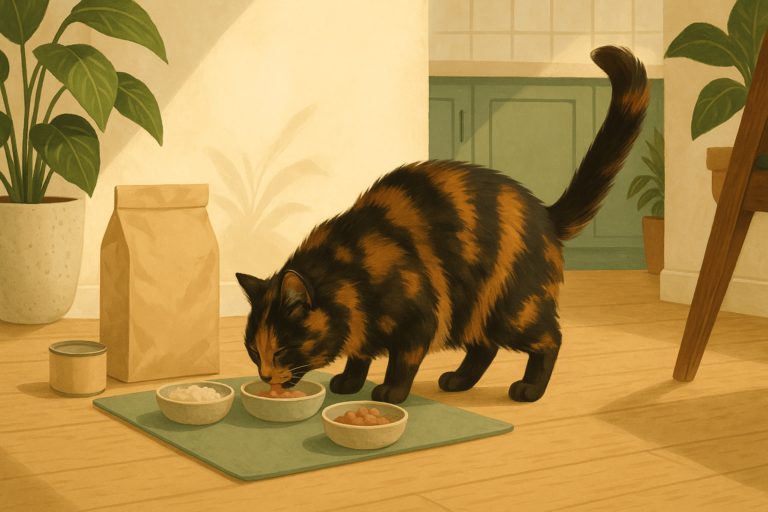
Feed a diet formulated for kittens, and check the label for a statement that it meets the standards set by the Association of American Feed Control Officials. That AAFCO line is your assurance the food is complete and balanced, which means you don’t need to add supplements.1 Find out what the kitten was already eating and keep some of that food on hand. If you want to change brands, do it gradually over a week or so by mixing the old food into the new, rather than swapping cold turkey, which upsets young stomachs. We walk through the ratios in our piece on switching a cat’s food without the drama.

Kittens burn through fuel. They need more calories per pound than an adult cat to power all that growing, and their small stomachs can’t hold a day’s worth at once, so they eat more often.4 A young kitten does well on several small meals a day, tapering toward two or three meals as it approaches six months. Keep water available in a clean bowl, refreshed daily, kept away from the litter and the food isn’t left to go stale.1 One habit worth starting now: weigh and eyeball your kitten’s body condition as it grows, because feline obesity is common and easier to prevent than to reverse.1
The socialization window is already open, and closing
If we could tattoo one fact on every new owner’s hand, it’s this one. A kitten’s sensitive period for socialization, the stretch when new people, sounds, animals and handling get filed as normal rather than scary, begins around two to three weeks and may be closing by nine to ten weeks of age.2 Most kittens go home at eight or nine weeks. So the first weeks in your house are the tail end of the single most formative window your cat will ever have, and it’s quietly ticking while you’re busy buying litter.
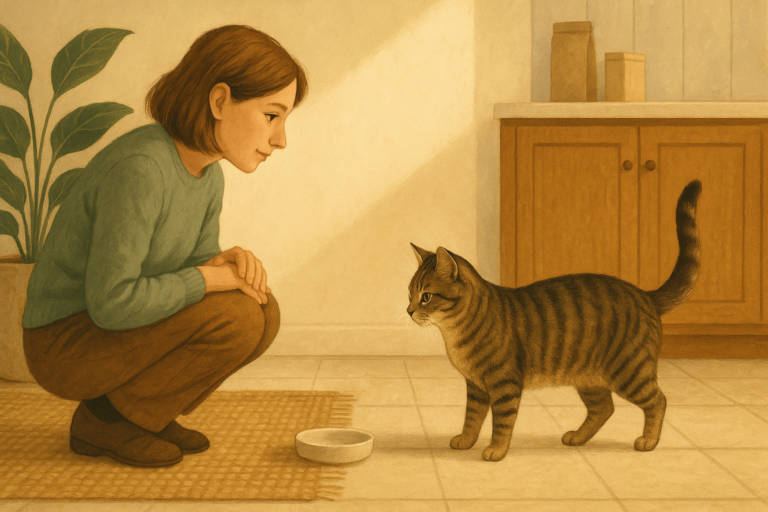
The good news is the work is pleasant. Aim for gentle, positive interaction with your kitten every day, on the order of half an hour or more of handling, play and calm company.2 Introduce the things adult life will demand while they’re still novelties: the carrier, nail trims, a soft brush, the sound of the vacuum, visitors, being picked up. Pair each with a treat and let the kitten approach on its own terms, because a startled or roughly handled kitten can carry that fear for life.2 One rule that saves you years of grief: never use your hands or feet as toys. A kitten wrestling your fingers is adorable. A ten-pound cat who learned that hands are prey is not, so redirect that energy onto a wand or a toy from the start.2
Build the indoor territory
An indoor kitten needs its environment to do the job the outdoors would. Scratching comes first, and it’s not optional or a behavior problem, it’s a normal need, so put out posts as soon as the kitten arrives.2 Cats tend to prefer a sturdy upright post at least three feet tall so they can stretch to full length, and rope or sisal tends to get used more than carpet when both are offered.2 Add vertical space, a cat tree, a cleared shelf, a window perch, because height is territory to a cat and it makes a small apartment feel bigger to them. Then commit to daily play. Kittens have a high prey drive and learn to hunt by chasing, pouncing and swatting, so a few short wand-toy sessions a day burn energy that would otherwise become three-a.m. zoomies.2 We go deeper on keeping an indoor cat stimulated in our indoor enrichment guide and on what boredom actually looks like.
Kitten-proof the space
Kittens investigate with their mouths and fit through gaps you’d swear were too small. Before one explores your home, do a low-to-the-ground sweep. Tuck away dangling cords and blind pulls, pocket small swallowable objects like hair ties and rubber bands, then secure anything that could topple. Check your houseplants against a toxic-plant list, because lilies in particular are severely poisonous to cats and common in bouquets.1 Keep the toilet lid down and be mindful of the washer and dryer, which curious kittens have been known to climb into. None of this has to be perfect on day one, since the kitten starts in its safe room anyway, but each room should get the sweep before the kitten gets the keys to it.
When to call the vet
Kittens are small, which means they have little reserve and can go downhill fast, so they earn a lower threshold for a call than an adult cat would. Get in touch with your vet promptly if your kitten stops eating, turns lethargic or limp, vomits or has diarrhea more than once or twice, strains in the litter box, breathes with any effort or has discharge from the eyes or nose. A swollen, potbellied look in an otherwise thin kitten often points to intestinal worms and is worth a call as well.1 You know your kitten’s normal better than anyone within a day of meeting it, so trust the moment it stops acting like itself. For a fuller sorting of what’s urgent versus what can wait, we keep a cat health red flags guide. When in doubt, the phone call is always the cheap, safe move.
The bottom line
Bringing home your first kitten is far less complicated than the flood of advice suggests. Set up one calm room, book the vet visit and lock in the vaccine schedule, plan to spay or neuter by five months, feed a complete kitten diet a few times a day, and spend real time each day handling and playing while that socialization window is still open. Do those things and the rest is mostly cleanup and cuddles. The kitten will grow into the cat you helped shape, and the first few weeks of quiet, patient work are where most of that shaping happens.
Sources
- Cornell Feline Health Center, “Choosing and Caring for Your New Cat”
- AAHA/AAFP, “Behavior and Environmental Needs: Kittens” (2021 Feline Life Stage Guidelines)
- AAHA Trends, “The Fix by Five Initiative: Feline Spay/Neuter by 5 Months of Age”
- Cornell Feline Health Center, “How Often Should You Feed Your Cat?”