The Best Wet Cat Food for Sensitive Stomachs
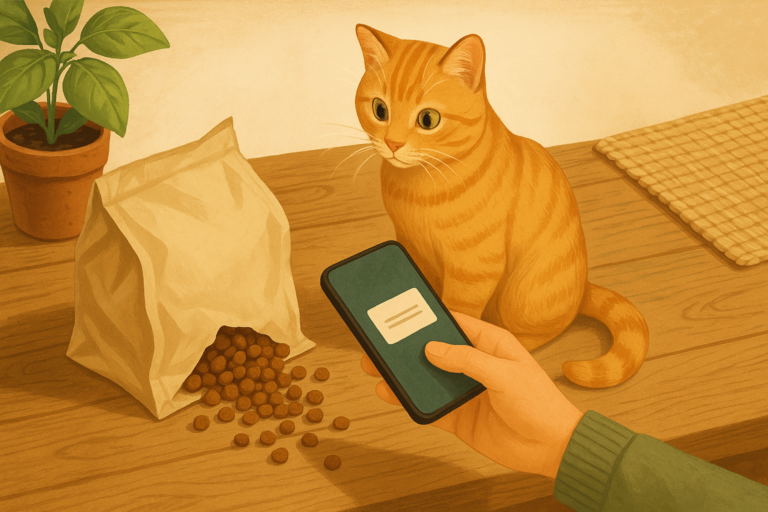
At the clinic intake desk, the sensitive-stomach cat had a signature. The owner would set the carrier down, sigh and describe the same week on repeat: a good day or two, then a puddle of half-digested food on the rug at 6 a.m. Sometimes it was loose stool instead. Almost always they had already swapped foods twice, fast, hoping the next bag would be the one. That churn is usually part of the problem, not the fix. A cat with a touchy gut does better with the right kind of food introduced slowly than with a new food every week. Here are the wet foods I would start from, and how to switch without setting off the next round.
As Amazon Associates we earn from qualifying purchases. Some links in this post are affiliate links; if you buy through them, we earn a small commission at no extra cost to you. We only recommend products we’ve used or researched thoroughly. See our full disclosure.
The sensitive-stomach wet foods, at a glance

Hill’s Science Diet Sensitive Stomach & Skin
Highly digestible · chicken-based · skin support too
- ✓ Built around easily digestible protein
- ✓ Targets stomach and coat at once
- ✓ Minced texture, widely stocked
- ✓ Mid-range, easy to source in a pinch
on Amazon
Price as of Sep 21, 2026, 9:21 AM EDT. Product prices and availability are accurate as of the date/time indicated and are subject to change.

Purina Pro Plan Sensitive Skin & Stomach Pâté
Grain-free · prebiotic fiber · smooth pâté
- ✓ Real chicken as the first ingredient
- ✓ Added prebiotic fiber from chicory root
- ✓ Grain-free, no corn wheat or soy
- ✓ Smooth pâté for easy eating
on Amazon
Price as of Sep 21, 2026, 9:21 AM EDT. Product prices and availability are accurate as of the date/time indicated and are subject to change.

Royal Canin Feline Digestive Care Loaf
Digestion-formulated · loaf in sauce · non-prescription
- ✓ Formulated around digestible proteins
- ✓ Aimed at firmer, less smelly stool
- ✓ Soft loaf that is easy to portion
- ✓ Over-the-counter, no vet script needed
on Amazon
Price as of Sep 21, 2026, 9:21 AM EDT. Product prices and availability are accurate as of the date/time indicated and are subject to change.

Tiki Cat After Dark Variety Pack
Short ingredient list · high protein · grain-free
- ✓ Simple recipes, few added extras
- ✓ Named meats, no grain or filler
- ✓ High moisture, high protein
- ✓ Good test for a filler-reactive cat
on Amazon
Price as of Sep 21, 2026, 9:21 AM EDT. Product prices and availability are accurate as of the date/time indicated and are subject to change.
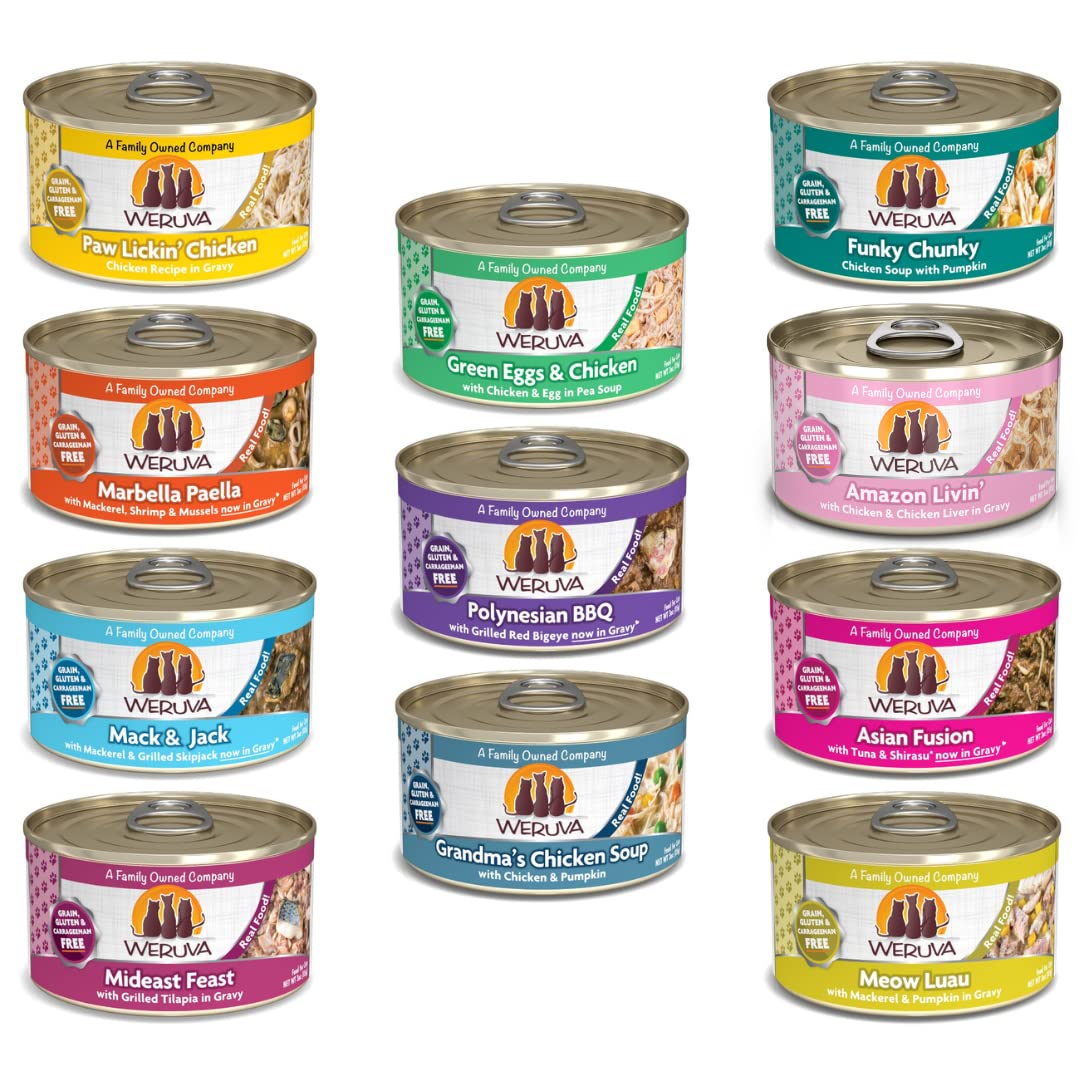
Weruva Classic Variety Pack
Very high moisture · whole named proteins · grain-free
- ✓ High water content in every can
- ✓ Recognizable whole-muscle meat and fish
- ✓ Grain-free, several proteins per box
- ✓ Premium tier for a picky sensitive cat
on Amazon
Price as of Sep 21, 2026, 9:21 AM EDT. Product prices and availability are accurate as of the date/time indicated and are subject to change.
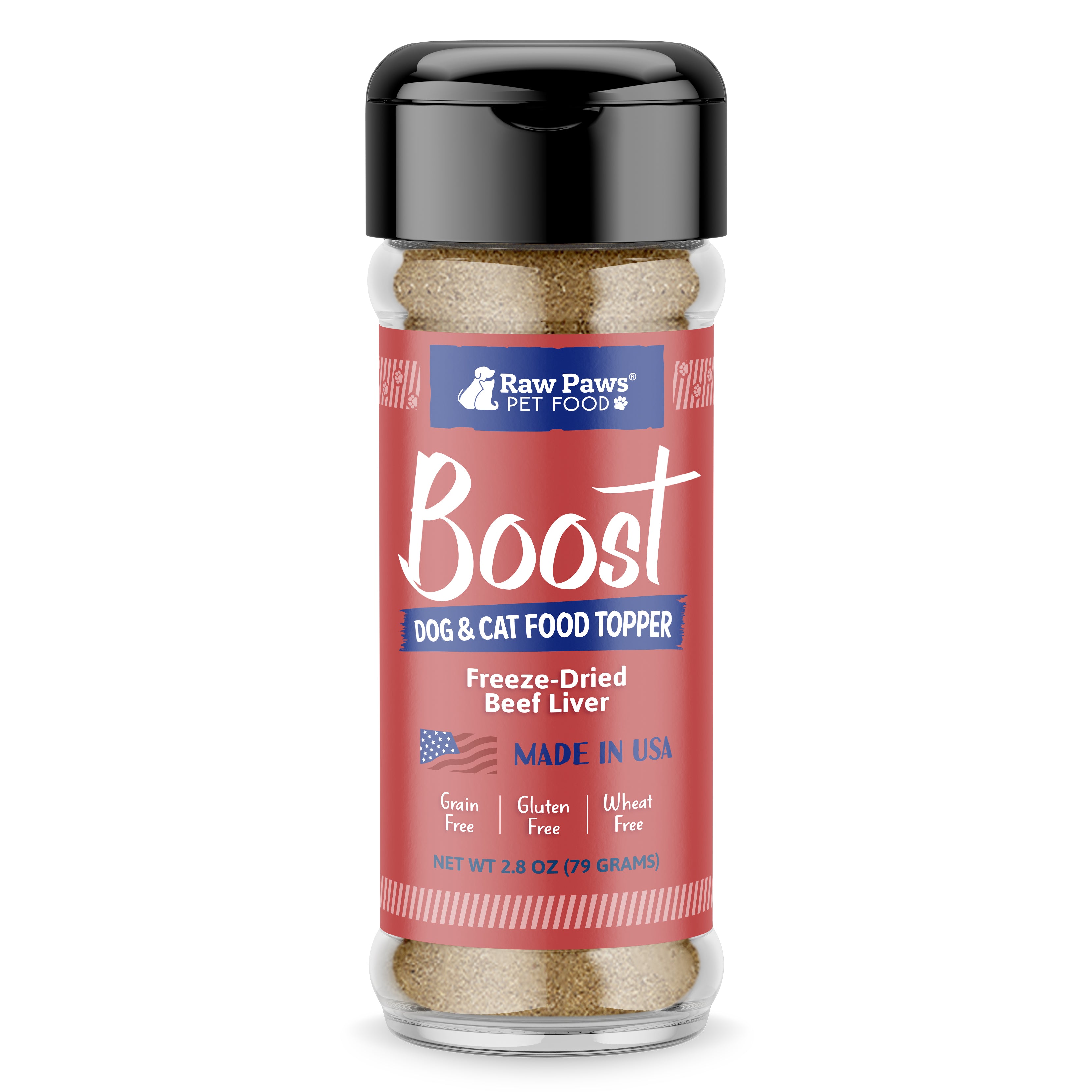
Boost Freeze Dried Beef Liver Topper (Raw Paws)
3.2 oz shaker jar · single-ingredient beef liver · sprinkle over any of the above
- ✓ Single ingredient: beef liver, nothing else added
- ✓ An easy way to boost palatability without swapping the whole diet
- ✓ Shaker jar with a sprinkle-and-pour spout for easy portioning
- ✓ An add-on for a fussy eater, not a replacement for a full sensitive-stomach formula
on Raw Paws Pet Food
Price as of Sep 21, 2026, 9:21 AM EDT. Product prices and availability are accurate as of the date/time indicated and are subject to change.
Quick take:
- Wet food is a sensible starting point for a touchy gut: it runs about 75 percent or more moisture, so it adds water while it feeds.1
- Look for one named meat near the top of the ingredient list and a short, recognizable recipe. That is the read Cornell suggests for any cat food.1
- My everyday starting point is Hill’s Science Diet Sensitive Stomach & Skin. Purina Pro Plan and Royal Canin Digestive Care are the digestion-focused picks. Tiki Cat and Weruva cover the limited-ingredient and premium ends.
- If your vet has diagnosed a specific gut condition, a prescription diet may be the real answer. Those are a vet conversation, not an Amazon add-to-cart.
- Whatever you choose, switch to it slowly. A sudden change is a common trigger for the very upset you are trying to stop.3
- Occasional vomiting happens. Vomiting more than once a week, or with appetite loss or weight loss, is a vet call.2
What “sensitive stomach” usually means
Sensitive stomach is an owner’s phrase, not a diagnosis. It tends to cover a cluster of things: intermittent vomiting that isn’t a hairball, soft or smelly stool, gas or a cat who eats well but seems queasy afterward. Some of that is diet. Plenty of it isn’t. Cornell’s Feline Health Center lists a long roster of reasons a cat throws up, from swallowed string and hairballs to parasites, inflammatory bowel disease and metabolic conditions like kidney disease and hyperthyroidism.2 Food is one lever, and often a useful one, but it isn’t the whole board.
So the honest framing is this. If your cat is otherwise bright, holding weight and just has an unsettled gut, a gentler food and a slower feeding routine are a reasonable first move. If anything bigger is going on, the food change buys you nothing and costs you time. The section at the end on when to call your vet is there to help you tell those apart. Food allergies and food intolerances are their own tangle, and we pull them apart in our piece on cat food allergies versus intolerances.
What to look for in a sensitive-stomach wet food
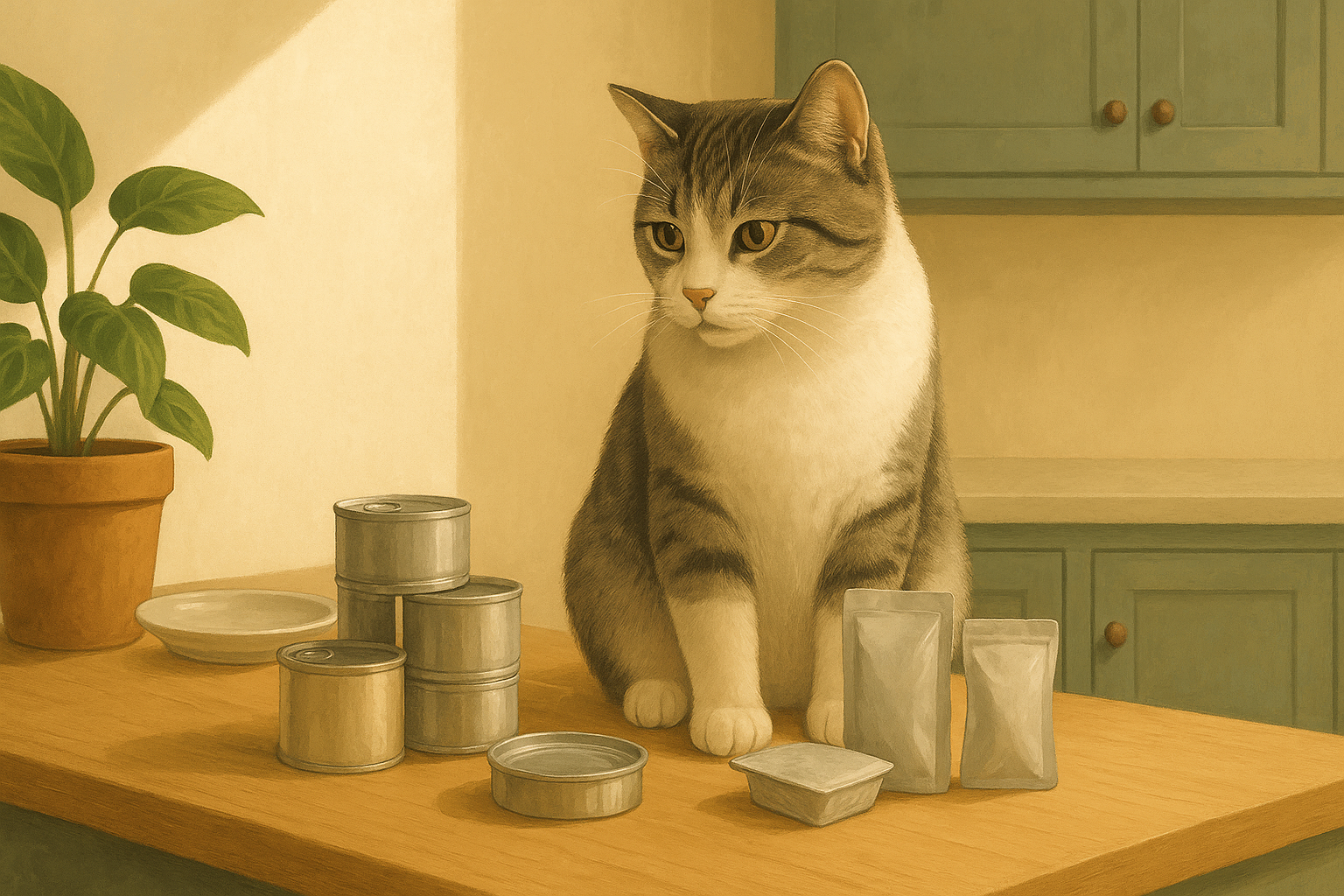
A few things separate a food worth trying from a bag of marketing. The first is moisture, and it is the reason I lean wet for these cats. Canned food carries at least 75 percent water, which makes it a genuine source of hydration on top of nutrition, where dry food sits down around six to ten percent.1 More water through the day tends to mean an easier passage out, which matters for a gut that is already grumpy.
The second is the ingredient list. Cornell’s advice for choosing any cat food is to look for meat, meat byproducts or seafood among the first few ingredients, since that signals enough animal-source material to supply the amino acids a cat actually needs as an obligate carnivore.1 For a sensitive cat I go one step further and favor a short list built on a single named protein, so there are fewer moving parts to react to. The third is texture. A smooth pâté or a soft loaf is often easier on a queasy cat than chunks in heavy gravy, and it is simpler to warm and to portion.
One note on prescription diets
You will see three names come up constantly for gut issues: Royal Canin Gastrointestinal, Hill’s Prescription Diet i/d and Purina Pro Plan Veterinary Diets EN. Those are therapeutic diets, sold through your vet for a diagnosed condition, and they can be the right tool when a cat truly needs one. They are also a different category from everything in this roundup. We don’t link prescription food, because it belongs behind a veterinary conversation, not a checkout button. If your cat’s stomach trouble is frequent or serious enough that you are eyeing one of these, that itself is the signal to book the appointment. Everything below is over-the-counter, meant for the milder, everyday kind of sensitivity.
The wet foods I’d start from
Hill’s Science Diet Sensitive Stomach & Skin
Hill’s Science Diet Sensitive Stomach & Skin is where I point most owners first. It is built around an easily digestible recipe, it is formulated to help the coat at the same time (the skin and the gut often flare together), and it is stocked almost everywhere, which counts for a lot when you are mid-flare on a Sunday night. The minced wet texture is gentle and easy to mix during a transition. It sits in the mid-range on price, and for a garden-variety sensitive stomach it is the most sensible default on this list.
Purina Pro Plan Sensitive Skin & Stomach Pâté
Purina Pro Plan Sensitive Skin & Stomach leads with real chicken and adds a prebiotic fiber sourced from chicory root, which is the brand’s nod at feeding the gut, not only the cat. It is grain-free with no corn, wheat or soy, and the smooth pâté goes down easily for a cat who is being cautious about food. If Hill’s doesn’t land, this is the first alternative I would reach for, and the two are close enough that trying both to see which your cat prefers is a fair plan.
Royal Canin Feline Digestive Care Loaf
The over-the-counter Royal Canin Feline Digestive Care Loaf in Sauce is the most digestion-forward option here that you can buy without a script. It is built on digestible proteins and aimed squarely at better stool quality, which owners tend to notice first as firmer, less pungent litter-box results. The soft loaf portions cleanly and warms well. Worth being clear: this is the retail Digestive Care line, not the prescription Gastrointestinal diet, so treat it as a step up in focus, not a medical treatment.
Tiki Cat After Dark
If you suspect fillers are the trouble, Tiki Cat After Dark is the cleanest test on this list. The recipes are short, high in protein and grain-free, with named meats and not much else. There is nothing therapeutic about it, but for a cat who does better on simple food, stripping the recipe back to a few recognizable ingredients can settle things on its own. It sits in the premium tier, so I treat it as a limited-ingredient trial rather than the everyday base, at least until you know it agrees with your cat.
Weruva Classic Variety Pack
Weruva Classic is the high-moisture, whole-food end of the shelf. The cans are very wet, the proteins are recognizable pieces of meat and fish rather than a uniform paste, and the recipes are grain-free. For a sensitive cat who is also fussy, the extra water and the real texture can be the thing that gets dinner eaten at all. It is premium-priced and the looser texture won’t suit every cat, but as a rotation option for the hard cases it earns its spot.
How to switch without restarting the problem
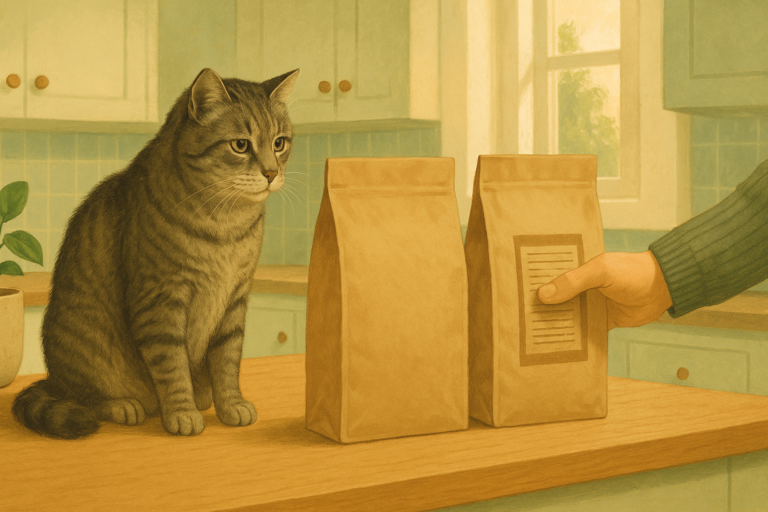
This is the step most people skip, and it is the one that undoes the rest. A sudden food change can cause digestive upset on its own, and cats are especially prone to it. The American Animal Hospital Association’s guidance is to move over gradually, replacing a quarter of the old food with the new at first and increasing from there, and it notes cats can need up to 40 days to fully come across.3 With a sensitive cat I stay at the patient end of that range.
- Go slow and mix. Start with mostly the old food and a little of the new, blended together, then shift the ratio over a week or two. If stool loosens, hold at the last ratio that was fine before nudging it further.
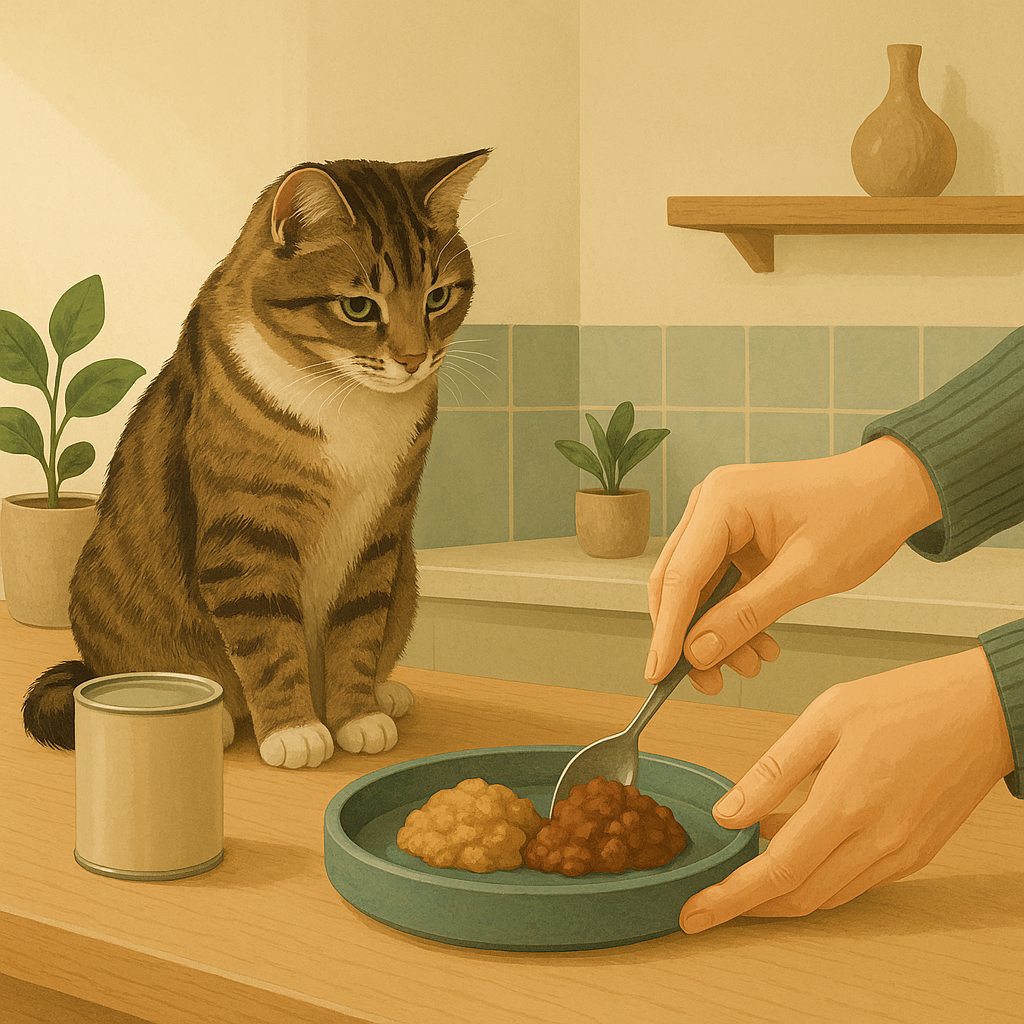
- Serve it a touch warm. Cats reject food at temperature extremes and tend to prefer it near body temperature, which also lifts the aroma.3 A few seconds of warming can be the difference between eaten and ignored.
- Don’t push new food on a queasy day. Cats can build a lasting aversion to a food they ate right before feeling sick, so introduce a food you want to keep long-term when your cat is feeling well, not mid-flare.3
- Change one thing at a time. New protein, new brand and new texture all at once tells you nothing if it goes wrong. Move one variable so you can read the result.
When it’s food and when it’s a vet visit
Here is the line I always drew for owners at the desk. A settled sensitive stomach looks like a cat who has an off morning now and then but is eating, holding weight and acting normal. That cat is a good candidate for a gentler food and a slower routine. The picture changes fast when the gut trouble is frequent or comes with other signs.
Cornell is specific here: cats that vomit more than about once a week, or that show lethargy, weakness, a drop in appetite, blood in the vomit, increased thirst, a change in urination or diarrhea alongside it, should be seen promptly.2 None of the foods above are a treatment for that. They are for the milder, everyday sensitivity, and they work best once a vet has ruled out the bigger reasons a cat’s stomach acts up. If your cat is losing weight or you are seeing those red flags, put down whatever they will reliably eat and call your vet rather than running another food experiment.
The bottom line
For most everyday sensitive stomachs, start with Hill’s Science Diet Sensitive Stomach & Skin, move to Purina Pro Plan or Royal Canin Digestive Care if you want a more digestion-focused formula, then keep Tiki Cat or Weruva in reserve for the filler-reactive or fussy cat. Then do the boring part well: switch slowly, serve it a little warm and change one thing at a time. The food matters, but the pace of the change matters just as much for a gut that is already on edge. And if the trouble is frequent or your cat seems unwell, let your vet lead. No bowl of food substitutes for that.
Sources
- Cornell Feline Health Center, “Feeding Your Cat”
- Cornell Feline Health Center, “Vomiting”
- American Animal Hospital Association, “Tips and Timelines for Transitioning Your Pet to a New Food”
TheCatWellness is reader-supported and we are not veterinarians. This article is general information, not medical advice for your individual cat. If your cat vomits often, loses weight or seems unwell, talk to your vet.