Best dry foods for senior cats: the two real options
At the vet clinic front desk, senior cat food came up in almost every eleven-plus wellness visit, usually as a quick question on the way out the door: should I be switching her food now that she’s getting older? The instinct is a good one. What most owners don’t realize is that “senior” isn’t a regulated life stage the way “kitten” is. AAFCO, the body that sets nutrient minimums for pet food, recognizes exactly two feeding categories for a healthy cat: growth (kittens, and pregnant or nursing cats) and maintenance (every other adult cat).1 A bag labeled senior still gets certified against the same adult maintenance minimums as a bag with no age claim at all. That doesn’t make a senior formula pointless. It means the word on the front tells you almost nothing about what actually changed inside, and it’s worth looking past it to the two dry foods below that are worth considering.
As Amazon Associates we earn from qualifying purchases. Some links in this post are affiliate links; if you buy through them, we earn a small commission at no extra cost to you. We only recommend products we’ve used or researched thoroughly. See our full disclosure.
The two real options, at a glance

Hill’s Science Diet Senior 11+ Dry, Chicken
Formulated for cats 11 and older · chicken-first recipe · long-running clinic staple
- ✓ Age threshold set at 11+, the higher end of the senior range
- ✓ Chicken listed as the first ingredient
- ✓ One of the most commonly stocked senior formulas at vet clinics
- ✓ Mid-range price tier
on Amazon
Price as of Oct 26, 2026, 9:21 AM EDT. Product prices and availability are accurate as of the date/time indicated and are subject to change.
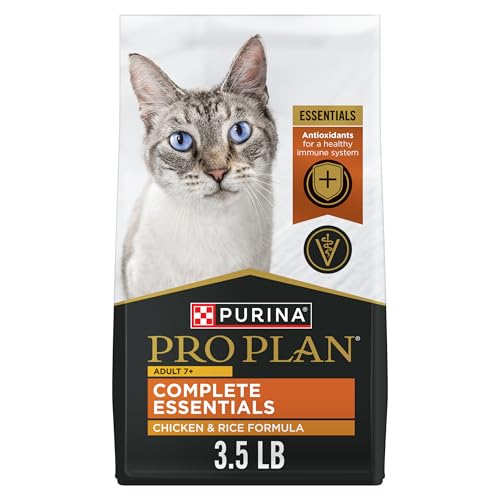
Purina Pro Plan Senior 7+ Complete Essentials
Formulated for cats 7 and older · chicken and rice recipe · budget-friendly
- ✓ Age threshold set at 7+, roughly where AAHA’s mature adult stage begins
- ✓ Complete Essentials line built around chicken and rice
- ✓ Budget-friendly everyday tier
- ✓ Widely stocked
on Amazon
Price as of Oct 26, 2026, 9:21 AM EDT. Product prices and availability are accurate as of the date/time indicated and are subject to change.
Quick take:
- “Senior” isn’t an AAFCO-regulated life stage. A senior bag is certified against the same adult maintenance nutrient minimums as any other adult cat food.1
- Protein needs don’t fall with age. The 2021 AAHA/AAFP guidelines say healthy senior cats shouldn’t be protein-restricted, and recommend a moderate to high 30 to 45 percent dry matter minimum.2
- Phosphorus restriction, the thing a lot of “senior” and “kidney support” marketing leans on, is a treatment for cats already diagnosed with chronic kidney disease. It isn’t a preventive step for a healthy cat.3
- Hill’s sets its age threshold at 11+. Purina’s starts at 7+. Neither number is arbitrary, but neither is a hard biological line either.
- Dental pain and a duller sense of smell both become more common in older cats and can change how much a cat eats regardless of which food is in the bowl.4
What actually changes as a cat gets older
The research doesn’t back up the old assumption that aging cats need less protein. The opposite shows up more consistently: senior cats often lose lean muscle mass faster than younger adults, and cutting protein tends to make that worse, not better. The 2021 AAHA/AAFP Feline Life Stage Guidelines are direct about it: healthy mature and senior cats shouldn’t be protein-restricted, and a moderate to high protein diet, in the 30 to 45 percent dry matter range, is the recommendation for cats without a diagnosed kidney or liver condition.2
Calorie needs shift too, just not in the direction some owners expect. Cats over ten often need noticeably more calories per pound, not fewer, because digestive efficiency tends to decline with age. The guidelines put the adjustment at 10 to 25 percent above a cat’s resting energy requirement, and note that being underweight is now a more common problem in senior cats than obesity.2 An indoor cat who’s slowed down and seems less interested in play can still be under-eating relative to what her body needs.
The phosphorus question most senior marketing skips
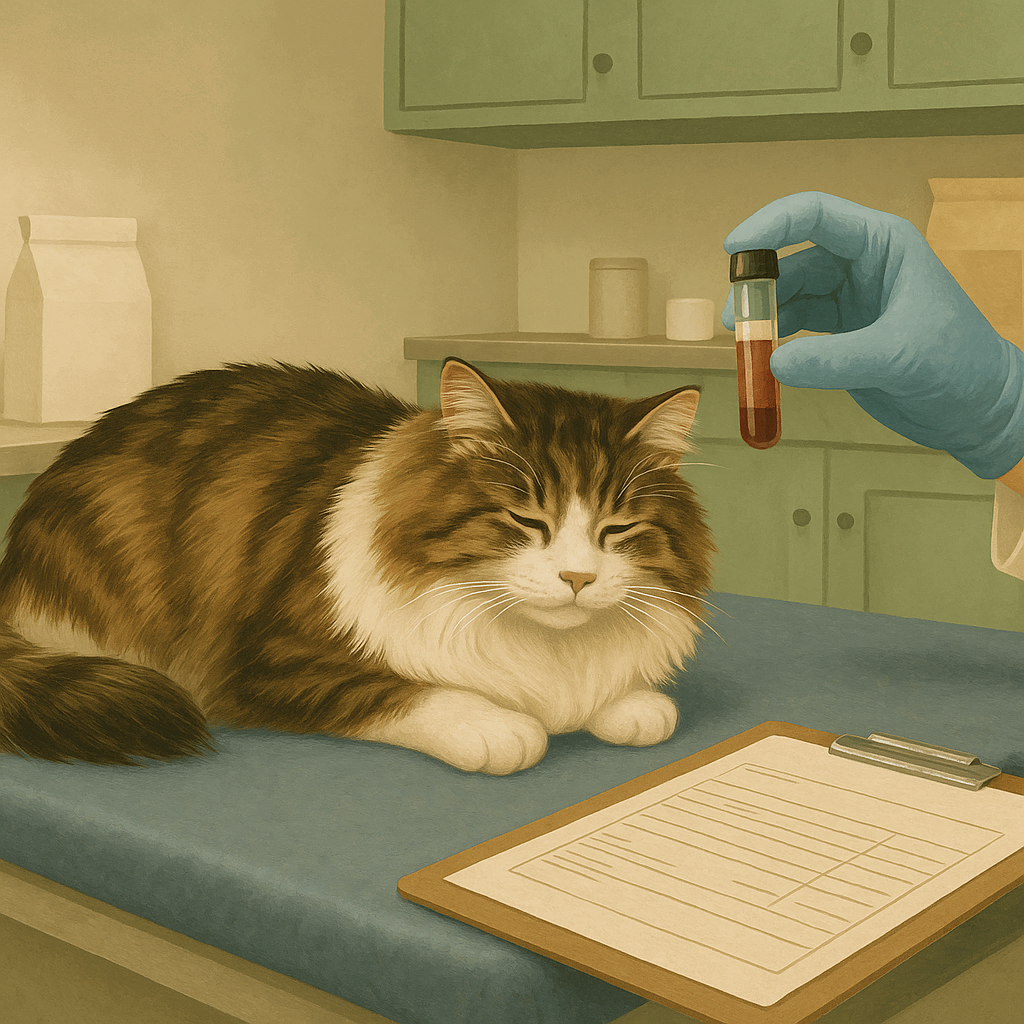
A lot of “senior” and “kidney support” language on pet food bags borrows credibility from a real, well-documented treatment: prescription renal diets restricted in protein, phosphorus and sodium, which Cornell’s Feline Health Center says can extend life and improve quality of life for cats already diagnosed with chronic kidney disease.3 Age is the only known risk factor for feline CKD, and it’s common enough in cats over ten that Cornell recommends regular monitoring for every senior cat.3 But that’s a reason to get bloodwork done at your cat’s next wellness visit, not a reason to preemptively restrict a healthy cat’s protein or phosphorus on your own. Neither Hill’s Senior 11+ nor Purina Pro Plan Senior 7+ is a therapeutic renal diet, and if your cat is ever diagnosed with kidney disease, the right next food is a prescription formula your vet picks based on her specific bloodwork, not a switch you make from the pet food aisle.
The two worth trying
Hill’s Science Diet Senior 11+ Dry Cat Food, Chicken
Hill’s Senior 11+ sets its age cutoff at 11, which lines up closer to what AAHA classifies as the senior life stage rather than the earlier mature adult stage.2 It’s chicken-first, and it’s the formula that came up most often at the clinic for older cats with no other diagnosed condition, mostly because it’s a familiar, easy recommendation and it’s stocked almost everywhere. Given the research on protein above, I wouldn’t assume the senior label alone means it’s lower in protein than an adult formula. Check the guaranteed analysis panel on the bag rather than trusting the word “senior” to tell you anything on its own.
Purina Pro Plan Senior 7+ Complete Essentials, Chicken & Rice
Purina Pro Plan Senior 7+ starts its senior line at 7, closer to where AAHA’s mature adult category begins.2 That’s a reasonable pick if your cat is in that earlier window and you’d rather account for slowing digestion before it becomes obvious. It’s also the more budget-friendly of the two here, which matters if you’re testing whether an age-formulated food changes anything for your cat before committing to a pricier bag.
When it’s a food switch and when it’s a vet visit
Either of these foods is a reasonable thing to try for a healthy cat who’s simply gotten older and shows no other symptoms. It stops being the right first move if your cat is losing weight, eating less, drinking noticeably more water or avoiding her dry food in favor of anything soft.34 Those are all reasons to get bloodwork and a dental check done before changing anything, since weight loss and reduced appetite in an older cat can point to kidney disease, dental pain, hyperthyroidism or several other conditions a food swap won’t fix.34 A sudden shift in food preference, especially away from dry kibble, is also worth mentioning at your cat’s next visit rather than assuming it’s just pickiness.
The bottom line
Both of these foods are reasonable, unremarkable choices for a healthy older cat, and neither is a substitute for whatever your vet recommends if bloodwork turns something up. The label “senior” buys you an age-appropriate calorie count and a company’s best guess at what an aging cat needs. It doesn’t buy you a lower-protein diet, and it doesn’t mean your cat’s kidneys need help she doesn’t have yet. Read the guaranteed analysis, keep up with the wellness visits Cornell recommends for every cat over ten, and let bloodwork, not the bag, tell you when something needs to change.
Sources
- AAFCO, “Selecting the Right Pet Food”
- AAHA/AAFP, “2021 Feline Life Stage Guidelines: Nutrition and Weight, Mature Adult and Senior Cats”
- Cornell Feline Health Center, “Chronic Kidney Disease”
- VCA Animal Hospitals, “Dental Disease in Cats”
TheCatWellness is reader-supported and we are not veterinarians. This article is general information, not medical advice for your individual cat. If your cat is losing weight, eating less or drinking noticeably more water, talk to your vet.
More cat food guides
- The Best Kitten Foods: 3 Picks That Meet the Growth Standard
- The Best High-Protein Dry Cat Foods for Indoor Cats
- Best indoor cat food: 5 formulas that account for a life spent mostly on the couch
- Royal Canin vs Hill’s Science Diet: which one fits your indoor cat?
- Instinct Raw Boost vs Blue Buffalo Wilderness: which grain-free kibble for your indoor cat?
- Stella & Chewy’s vs Primal freeze-dried: which raw food fits your indoor cat?
- Stella & Chewy’s Magical Dinner Dust Review: Does a Freeze-Dried Topper Fix a Picky Eater?
- The Quest cat food recall: what happened, and what I’d feed instead