Indoor cat nutrition: what actually works
Nutrition touches everything else on this site. Get it wrong and it shows up as vomiting, a dull coat or a cat pacing the kitchen at 5 AM. I spent five years on a vet clinic’s front desk fielding the same feeding questions, usually from an owner who’d read three different things online and trusted none of them. This is the version I’d give a friend: what indoor cats need differently than the bag suggests, where the real evidence lives, and which specific guide on this site answers the question you’re stuck on.
The short version:
- Indoor cats burn fewer calories than the “maintenance” math on most bags assumes, so portion size matters more than brand.
- Wet food wins on hydration. Neither wet nor dry is objectively better for a healthy cat’s nutrition on its own.
- AAFCO certifies a nutrient floor, not a food’s overall quality. Learning to read a label yourself beats trusting the front of the bag.
- “Senior” and “indoor” aren’t regulated categories. They’re marketing layered on the same growth-or-maintenance certification every food carries.
- Treats should stay under 10% of daily calories, and most human food should stay off the menu entirely.
- Cats can’t make taurine and a few other nutrients themselves, which is why an unsupervised homemade diet carries real risk.
- A cat eating less for more than a day, or refusing food outright, is a different conversation than picky eating. Don’t wait it out.
What five years at the front desk taught me
The feeding questions at intake clustered into a small set of shapes, over and over. An owner holding two bags, unsure which one the vet tech would recommend. A cat that had “always eaten fine” until a switch to a new formula triggered a week of soft stool. A senior cat’s owner convinced the gold bag with “senior” printed on it was doing something the regular adult formula wasn’t. Almost none of these owners were doing anything wrong. They were just navigating a wall of marketing with no real way to check any of it against a standard.
That standard exists. It’s just not on the front of the bag. The rest of this page is the version of that standard I wish I could have handed every owner who stood at that counter, plus links to the specific guides on this site that go deeper on each piece.
Why indoor cats need a different approach
An indoor cat’s calorie math looks nothing like the outdoor cat the “maintenance” figure on most bags was calibrated against decades ago. Cornell’s Feline Health Center frames feeding amounts as a starting point to adjust against your own cat’s activity and body condition, not a fixed number to follow blindly.1 A peer-reviewed study of owner and cat-related obesity risk factors found that reduced activity and free access to food were both independently linked to higher odds of a cat carrying excess weight, a pattern that describes a huge share of indoor households.3 Obesity is now one of the most common conditions Cornell’s clinicians see in cats, and it raises the risk of diabetes, joint disease and liver problems.2 None of that means an indoor cat needs a special “indoor formula.” It means portion size and activity deserve more attention than the label does.
Read the label before you read the marketing
Every complete and balanced cat food sold in the US carries an AAFCO nutritional adequacy statement, and that statement is the real floor a food has to clear. It’s a certification of minimums for one of two life stages (growth, or adult maintenance), not a ranking of quality.4 Two bags can both say “complete and balanced for adult maintenance” and differ enormously in ingredient sourcing, protein source and price. Here’s the full walkthrough of what to actually look for on a bag, including where the guaranteed analysis panel tells you more than the marketing copy on the front.
Wet vs dry: the fight that isn’t really a fight
Canned food runs at least 75% water, while dry kibble sits at 6 to 10%, which is the main real nutritional difference between the two formats.1 That makes wet food a meaningful hydration lever, especially for cats prone to urinary or kidney issues, but it doesn’t make dry food nutritionally inferior on its own. Most cats do fine on either, or a mix of both, as long as the food meets the AAFCO standard above. The full wet-vs-dry comparison covers cost, dental effects and the cases where one genuinely edges out the other.
Life stage labels promise more than the rules require
Here’s the piece that surprised owners at the counter most: AAFCO officially recognizes only two feline life stages for certification purposes, growth and maintenance. There’s no separately regulated “senior” category.4 A bag labeled for a senior cat is certified against the same adult-maintenance minimums as any other adult food. That doesn’t make senior formulas useless. The 2021 AAHA/AAFP Feline Life Stage Guidelines push back directly on the old assumption that older cats need less protein, recommending healthy seniors get a moderate-to-high protein intake rather than a restricted one.5 Kitten food is the one place the label carries real regulatory weight, since growth has its own higher nutrient minimums for protein, fat, calcium and phosphorus. Three kitten formulas that clear that bar, and two senior formulas worth a look, both broken down against what the certification guarantees.
Grain-free and raw: read past the trend
Grain-free took off on a theory (grains as a common allergen) that doesn’t hold up well for cats specifically. True food allergies are uncommon, and when they happen the trigger is usually a protein source, not a grain.4 The grain-free breakdown covers where the format still makes sense and where it’s just a pricier bag. Raw and freeze-dried diets raise a different question entirely: real handling risk. The FDA has documented pathogen contamination in raw pet food at meaningfully higher rates than in cooked or processed formulas, with risk to both the cat and anyone handling the food.6 That risk is manageable with careful sourcing and handling, which is exactly what the freeze-dried raw comparison walks through brand by brand.
Treats and human food: the 10% rule
Treats are fine, within a limit: no more than 10% of a cat’s daily calories, with the rest coming from a complete and balanced food. The full treat-math breakdown shows what that looks like for an average indoor cat. Human food is a stricter question. The ASPCA maintains a list of foods that are genuinely dangerous to cats, including onions, garlic, grapes, chocolate and alcohol, some of which cause damage at surprisingly small doses.7 A few human foods are fine in small amounts, and a few sit in a gray zone owners ask about constantly: plain tuna and a stray bite of dog food both get their own answers, and the full toxic-food list is worth bookmarking rather than memorizing.
The nutrients a cat can’t make for itself
Cats are obligate carnivores, which is a specific biological claim, not a marketing phrase: they require certain nutrients, taurine chief among them, that they can only get from animal tissue because their bodies can’t synthesize enough on their own.1 A taurine deficiency can cause serious heart and eye disease over time. This is the single biggest reason a homemade or improvised diet is risky without real nutritional formulation behind it. Commercial foods that meet the AAFCO standard have already solved this problem for you. More on taurine specifically, including which formats are most likely to fall short.
Weight is the number one nutrition problem I saw
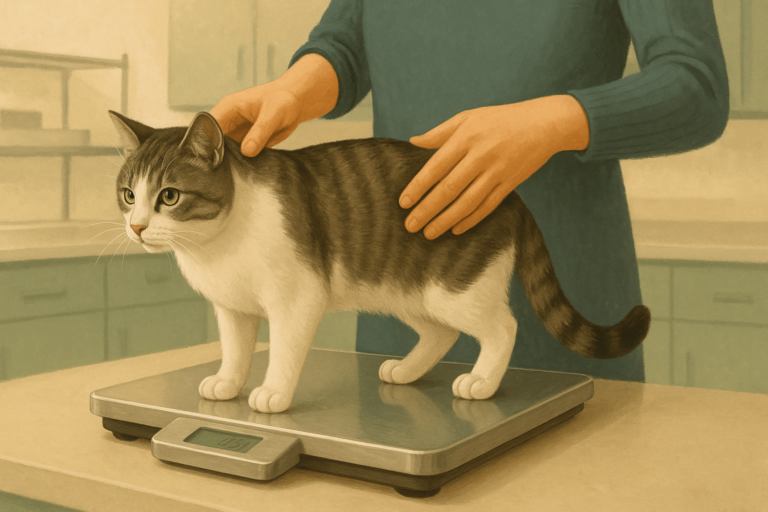
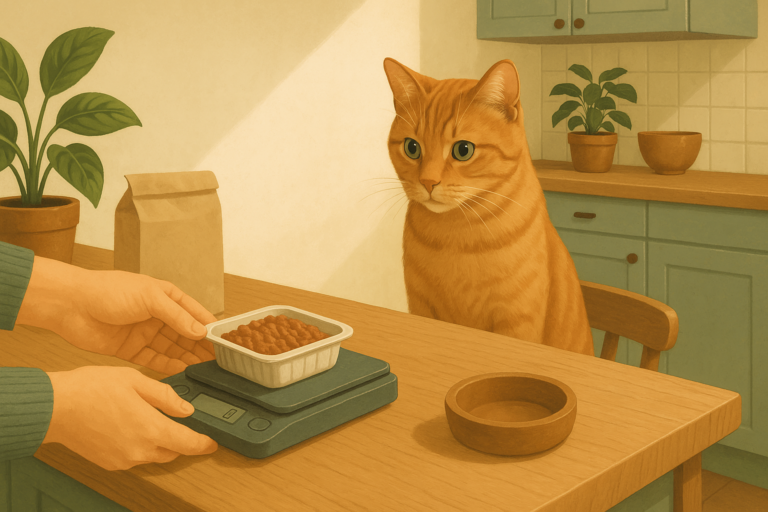
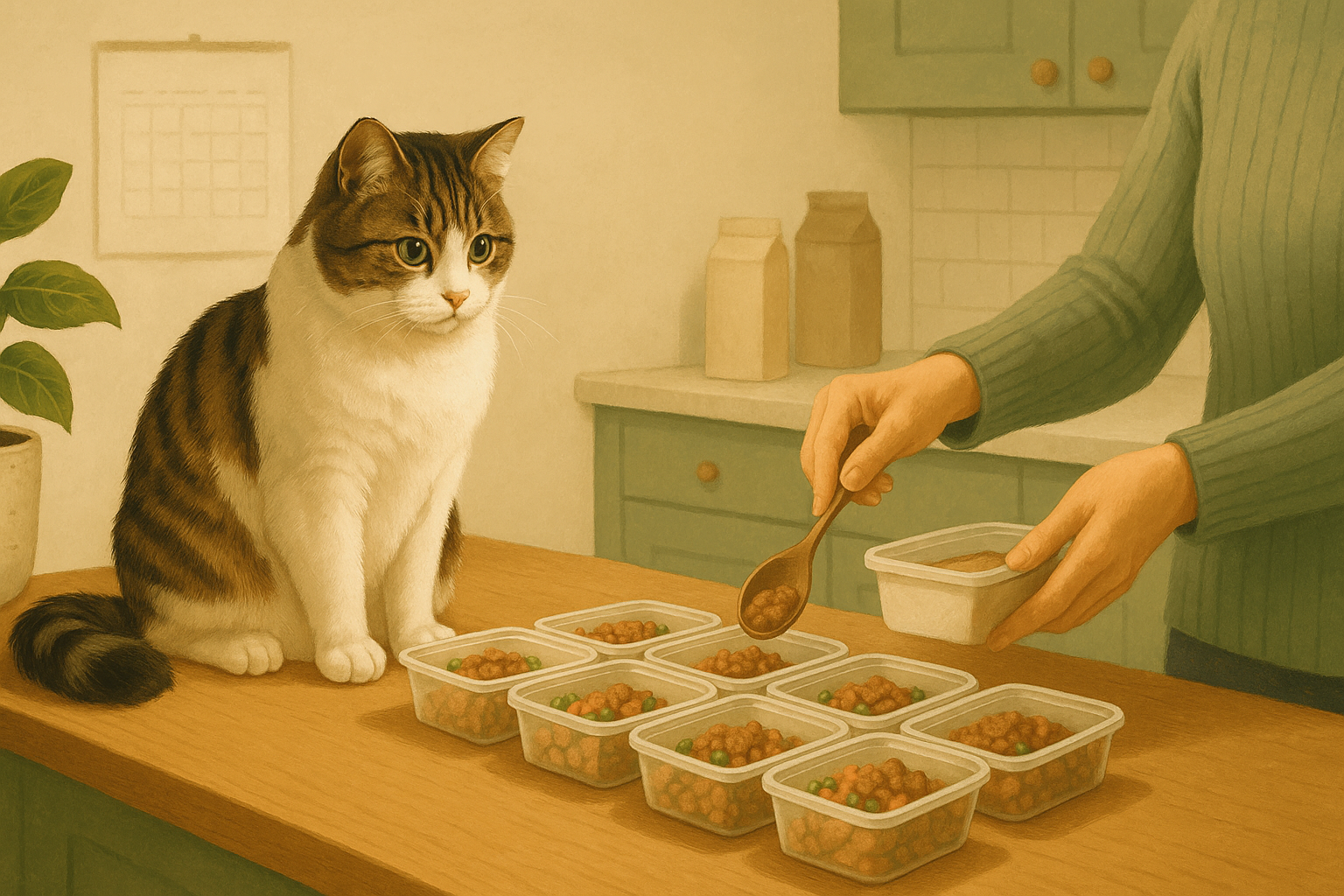
If I had to pick the single most common nutrition issue that walked through the clinic door, it was weight, not allergies or picky eating. Low activity and free-feeding are both independently tied to a higher chance of a cat carrying extra weight.3 The fix is rarely dramatic: measured portions instead of a full bowl left out all day, and a calorie target based on your specific cat’s current weight and body condition rather than the number printed on the bag. How to work out that number, and a practical plan if your cat’s already carrying extra weight.
Hydration is part of the nutrition conversation too
Water intake and food are linked closely enough that it’s a mistake to treat them as separate topics. An indoor cat’s whole water supply is whatever you set out, and many cats on a dry-food diet don’t drink enough to make up the difference, with downstream effects on kidney and urinary health.8 The hydration playbook covers fountains, bowl placement and the wet-food math in full.
When picky eating is the real issue
Some feeding problems aren’t nutritional at all. They’re behavioral: a cat that refuses new food on principle, eats only the gravy or won’t touch the bottom of a full bowl. That’s a large enough topic to deserve its own home. The picky-eater playbook covers the patterns, what tends to work and when pickiness has crossed into something that needs a vet visit.
Where to start if you’re buying today
If you want a place to start rather than the full research trail: the best wet foods for indoor cats and a broader five-formula roundup both apply everything above to specific products. Royal Canin vs Hill’s Science Diet is the head-to-head most owners end up needing at some point, and the high-protein dry food roundup is worth a look if your cat is active or you’re managing weight through protein rather than volume alone.
When to talk to your vet
Most feeding questions are setup questions you can work through at home. A few aren’t. Call your vet if your cat eats noticeably less, or nothing, for more than 24 hours. A cat that stops eating for even a couple of days is at real risk of hepatic lipidosis, a serious liver condition, so this isn’t one to wait out.1 The same goes for sudden weight loss or weight gain, repeated vomiting after meals, or a cat that was eating fine and abruptly won’t touch food it used to like. Any of those can be the first visible sign of dental pain, kidney disease, hyperthyroidism or something else that a feeding tweak won’t fix on its own.
The bottom line
Most of what makes indoor-cat nutrition different comes down to two numbers most owners never see: how many calories their specific cat burns, and what the AAFCO certification on the bag promises. Everything else, wet versus dry, grain-free, the senior formula, the treat bag, sits downstream of those two facts. Start with portion size and a food that clears the AAFCO floor for your cat’s real life stage, then use the guides above for the specific question you landed here with. If your cat’s eating changes suddenly, that’s the one signal worth calling your vet about rather than researching further.
More nutrition guides
- How do I read a cat food label?
- Wet or dry food: which is better for my cat?
- Is grain-free cat food better for cats?
- Why do cats need taurine?
- How much should I feed my cat each day?
- How do I help my overweight cat lose weight?
- How many treats can I give my cat a day?
- What human foods are toxic to cats?
- Can cats eat tuna?
- Can cats eat dog food?
- Why is my cat such a picky eater? What actually works
Sources
- Cornell Feline Health Center, “Feeding Your Cat”
- Cornell Feline Health Center, “Obesity”
- “Owner and Cat-Related Risk Factors for Feline Overweight or Obesity” (peer-reviewed, Frontiers in Veterinary Science, PubMed Central)
- AAFCO, “Selecting the Right Pet Food”
- AAHA/AAFP, “2021 Feline Life Stage Guidelines: Nutrition and Weight, Mature Adult and Senior Cats”
- FDA, “Get the Facts! Raw Pet Food Diets Can Be Dangerous to You and Your Pet”
- ASPCA, “People Foods to Avoid Feeding Your Pets”
- Cornell Feline Health Center, “Hydration”