Wet vs dry cat food: the hydration math
The wet-vs-dry debate gets stuck on protein content, ingredients and ash levels. The bigger lever for most indoor cats is the water. Canned food is at least 75 percent water; dry kibble is 6 to 10 percent. For a cat that struggles to drink enough from a bowl, that gap matters more than any other single dietary factor.
Quick take:
- An average 10-pound cat needs about one cup of water a day total.
- A cat on three wet meals a day can cover 60 to 80 percent of that through food.
- A kibble-only cat has to drink the entire daily figure from the bowl. Many don’t.
- Wet food doesn’t replace the water bowl, but it shifts the math in a hydration-favorable direction.
- A mix of wet and dry works for most cats. Cost, dental and convenience tradeoffs are real.
The water math, briefly
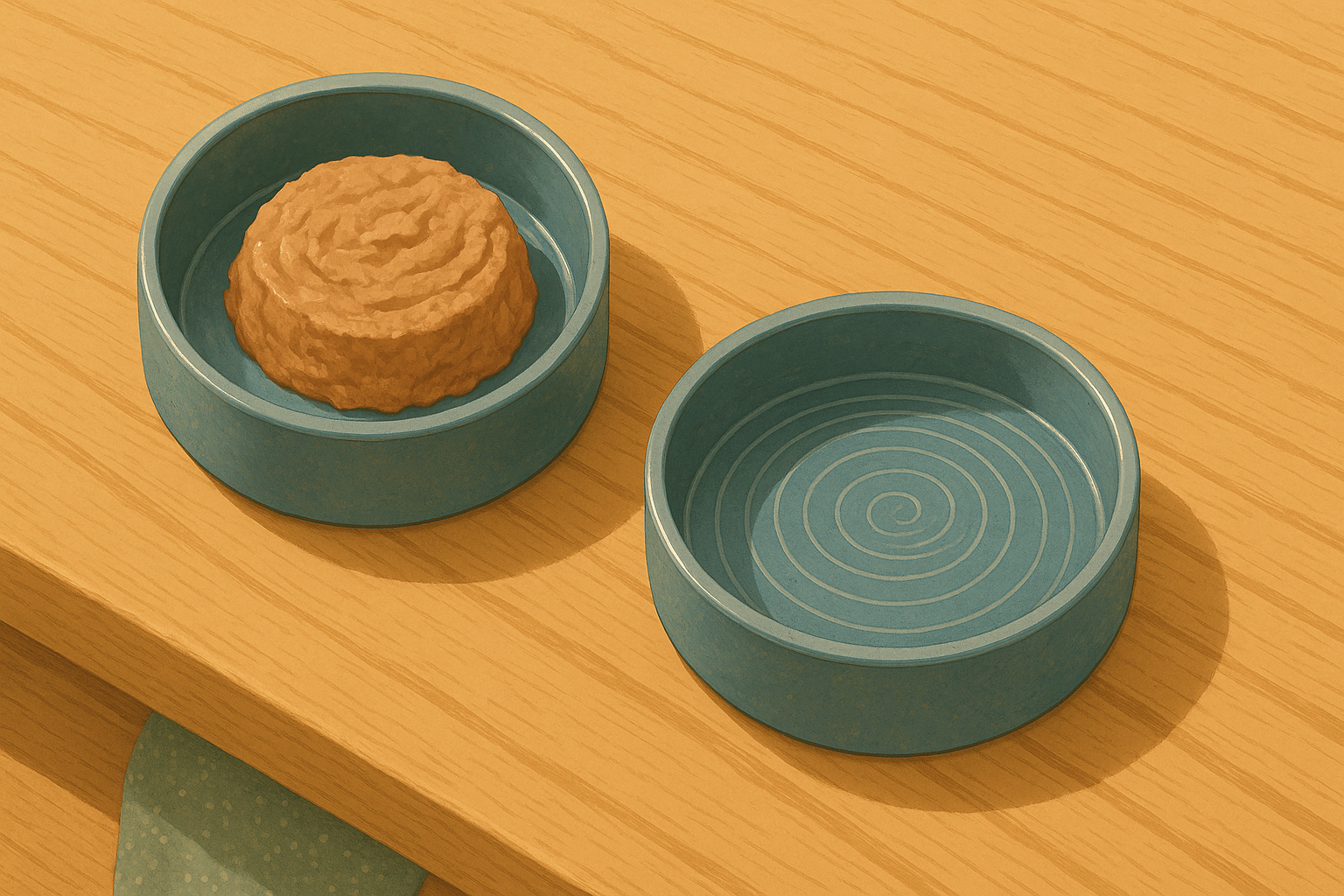
Canned cat food contains at least 75 percent water per Cornell.1 Dry kibble runs 6 to 10 percent.1 A typical 5.5-ounce can of wet food therefore carries roughly 4 ounces of water along with the meal. Three small wet meals a day moves about 12 ounces of water through the cat as part of eating, which is most of the way to her daily target. A kibble-only cat has to make that water up at the bowl, every day, on her own. Many indoor cats don’t.
Why this matters for indoor cats specifically
Indoor cats have a few characteristic vulnerabilities that amplify the hydration question. They’re less active than outdoor cats and tend to drink less in general. They depend entirely on the bowl you provide for water. And they’re disproportionately affected by lower-tract urinary issues, where chronic mild dehydration is a known risk factor. Cornell’s hydration guidance specifically notes that increased water intake is one of the standard recommendations for managing urinary tract health.1
What changes with a partial switch
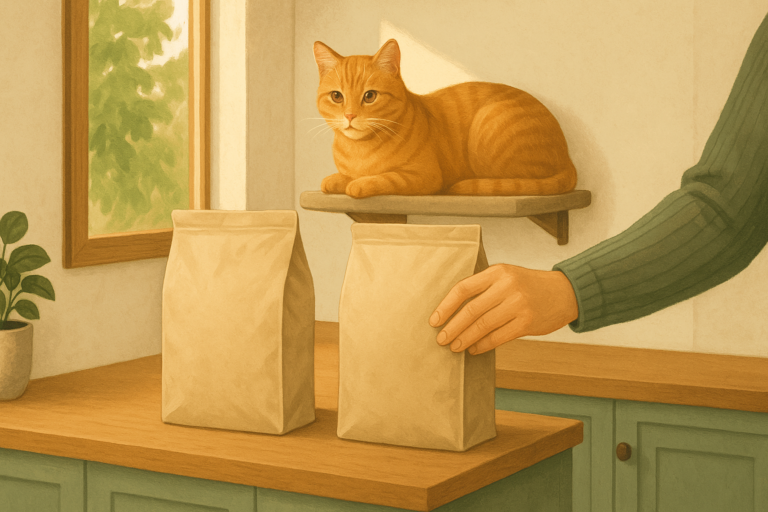
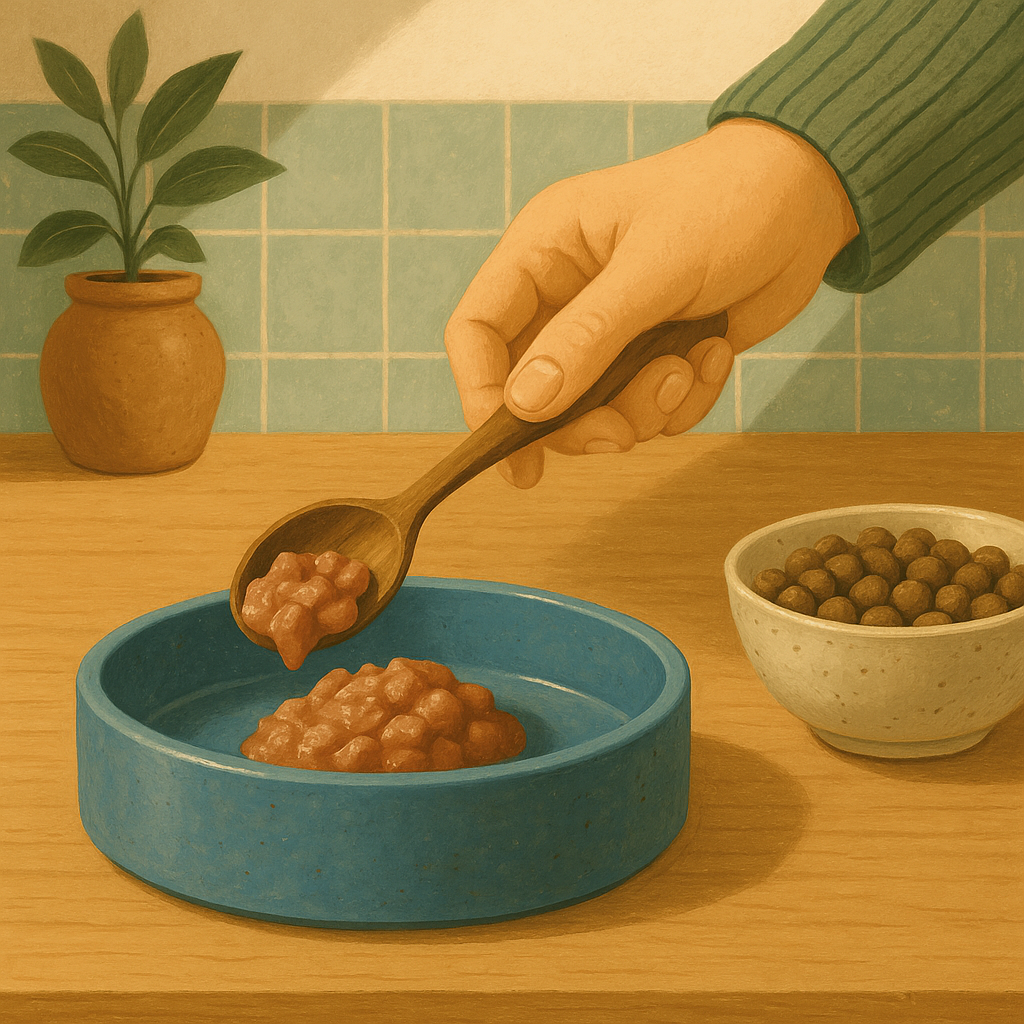
Most owners don’t need to go all-wet. A partial switch (one or two wet meals a day, kibble available between) shifts the hydration math meaningfully without committing to the higher cost or the every-meal cleanup of an all-wet diet. Cats on this kind of mix tend to drink slightly less from the bowl, which sometimes worries owners. That’s the expected pattern. The total fluid in is what matters, not where it comes from.
What dry food has going for it
Dry food isn’t a hydration disaster. It’s cheaper per calorie, doesn’t spoil at room temperature, supports free-feeding for cats that self-regulate and is mildly easier on dental tartar than wet food (the mechanical scraping effect is small but real). For cats that drink well from a clean, well-placed bowl, an all-dry diet can absolutely work. The cats it doesn’t work for are the ones who don’t drink enough.
For the broader hydration picture, see our complete guide to indoor cat hydration.
When to call the vet
- Sudden increase or decrease in your cat’s drinking patterns
- Visible signs of dehydration (tacky gums, lethargy, loss of skin elasticity)
- Recurring urinary tract issues
- Sudden food refusal that doesn’t pass within a day
- Any chronic condition (CKD, diabetes, hyperthyroidism), the wet/dry conversation is different and your vet’s input matters