Cat Scared of the Food Bowl? Why It Happens and How to Fix It
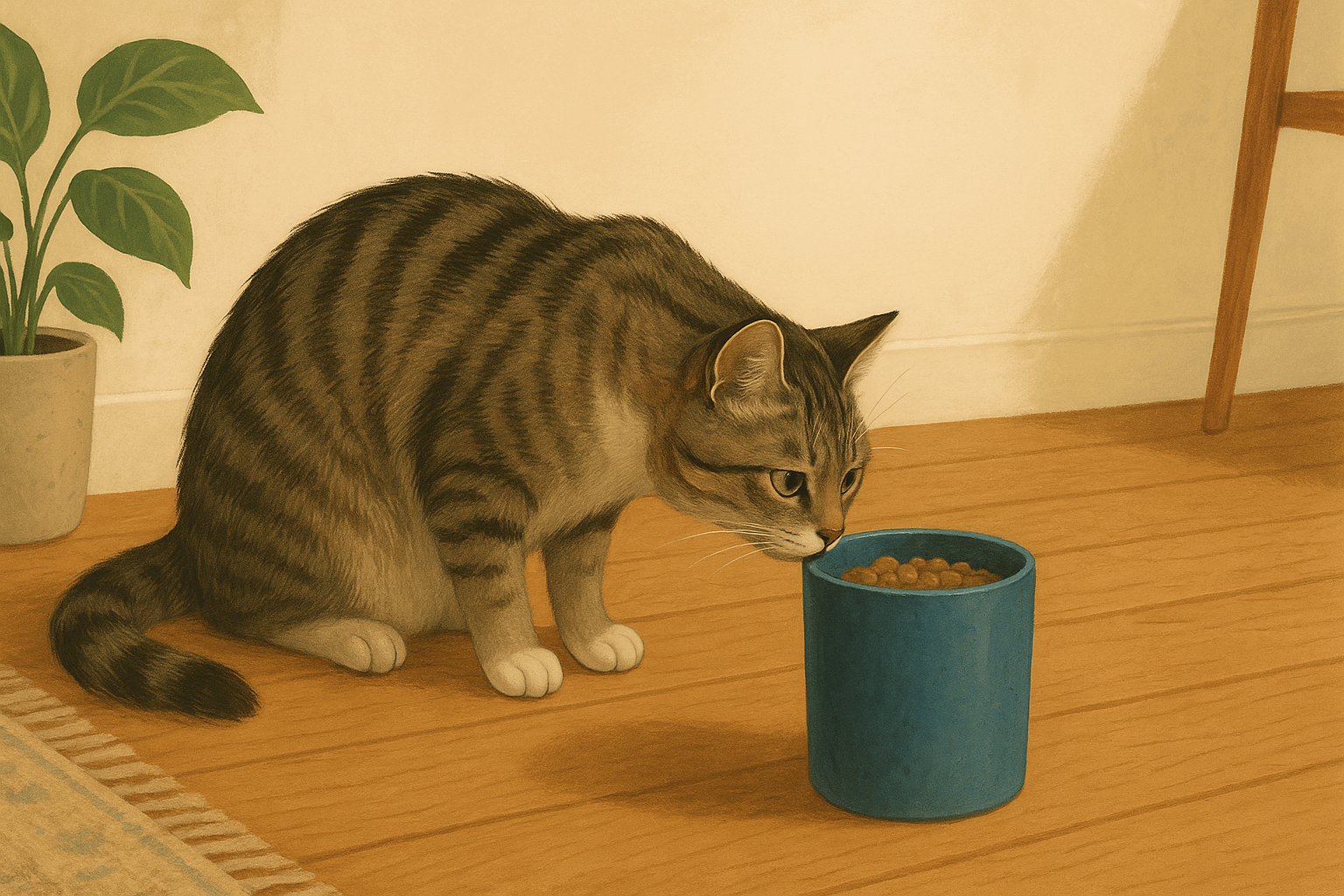
One of the most memorable cats I worked with at the rescue was a grey shorthair named Pepper who would walk up to her bowl, lean in, then flinch back as if it had bitten her. She was hungry. She wanted the food. But something about the bowl itself made her stop short, eat a few rushed bites and bolt. Owners describe this all the time: a cat who circles the dish, paws at the floor, eats standing as far back as her neck will stretch, or simply refuses to put her face in at all. It reads as fear, and it usually is, just not of the food. Here is what is actually going on when a cat seems scared of her food bowl, and how to fix it.
Quick take:
- A cat who hesitates, flinches or eats from the very edge of the bowl is almost always reacting to the bowl or its surroundings, not to the food.
- The usual suspects are a deep or narrow bowl, a stressful location, a bad memory tied to that spot, or pain that makes eating uncomfortable.
- “Whisker fatigue” is the popular explanation, but the science behind it is thin and disputed. A shallow, wide bowl is still a reasonable thing to try, just for the right reasons.
- Most cases improve fast once you change the bowl and move the feeding station to a calm, open spot.
- If the fear is sudden, paired with pawing at the mouth, drooling or eating less, rule out dental pain or nausea with your vet first.
It is rarely the food, and rarely “fear” in the way it looks
When a cat acts spooked at her bowl, the instinct is to assume she has decided the food is bad. But watch closely and the picture changes. A cat who hated the food would sniff and leave. A cat who is wary of the bowl wants to eat, approaches, and then something stops her at the last second. That gap between wanting the food and being able to relax enough to eat it is the whole problem, and it nearly always traces back to the bowl, the spot it sits in, or how her body feels when she lowers her head into it.
Cats are also creatures of strong association. The place where they eat carries meaning. If a cat felt cornered, startled or unwell in one specific spot, the bowl that lives there can inherit all of that, even after the original trigger is long gone. So the behavior that looks like a sudden phobia is usually a logical response to something the cat is reading in the environment that we are not.
The most common reasons a cat avoids her bowl
The bowl is too deep or too narrow. A cat reaching into a tall, steep-sided bowl has to push her face and whiskers against the rim with every bite. Some cats clearly dislike this and will pull food out onto the floor to eat it instead, or eat only from the top until they have to dig. A shallow, wide, flat dish removes the problem entirely, which is why it is the first thing I try.
The “whisker fatigue” question. You will see whisker fatigue named as the cause everywhere online: the idea that repeated contact between sensitive whiskers and the bowl builds up to genuine stress. It is a tidy story, and a cat’s whiskers really are richly wired with nerves. But the evidence is weak. The AVMA has noted there is no good research showing that whiskers brushing a bowl causes cats stress, and some veterinarians point out that the term took off alongside companies selling “whisker friendly” bowls.1 One small study found that bowl type made no difference to how much cats ate, though more cats, given the choice, preferred the shallow bowl.2 My take: a wide, shallow dish is cheap and easy and some cats clearly like it better, so it is worth trying. Just do not assume “whisker fatigue” is a settled diagnosis, because it is not.
The location stresses her out. A bowl tucked beside a noisy appliance, in a busy hallway, next to the litter box, or in a spot with no clear escape route can make a cat feel exposed. Cats prefer to eat where they can see the room and are not boxed in. In multi-cat homes, a cat who gets ambushed or stared down at the bowl will start treating mealtime as something to rush through or avoid.
A bad memory is attached to that spot. If a smoke alarm went off, a dog lunged, a bowl slid and clattered, or she was once given a bitter pill near the dish, a cat can form a fast and durable negative association with the place she eats. This is the version that looks most like pure fear, and it is also the one that responds best to simply moving the whole feeding station somewhere new.3
The bowl material bothers her. Metal bowls can ping and reflect light, and a tag or collar clinking against stainless steel startles some cats mid-bite. A heavier ceramic dish that stays put and stays quiet often settles a jumpy eater.
Eating hurts. This is the one to take seriously. Dental disease, mouth ulcers, or nausea from an underlying illness can make lowering the head into a bowl genuinely uncomfortable, and a cat will quickly start treating the bowl as the source of that discomfort. When the wariness is new, this is the first thing to rule out, not the last.
How to fix it, step by step
Most bowl avoidance clears up with a few low-cost changes. Work through these in order and give each one a few days before deciding it did not help.
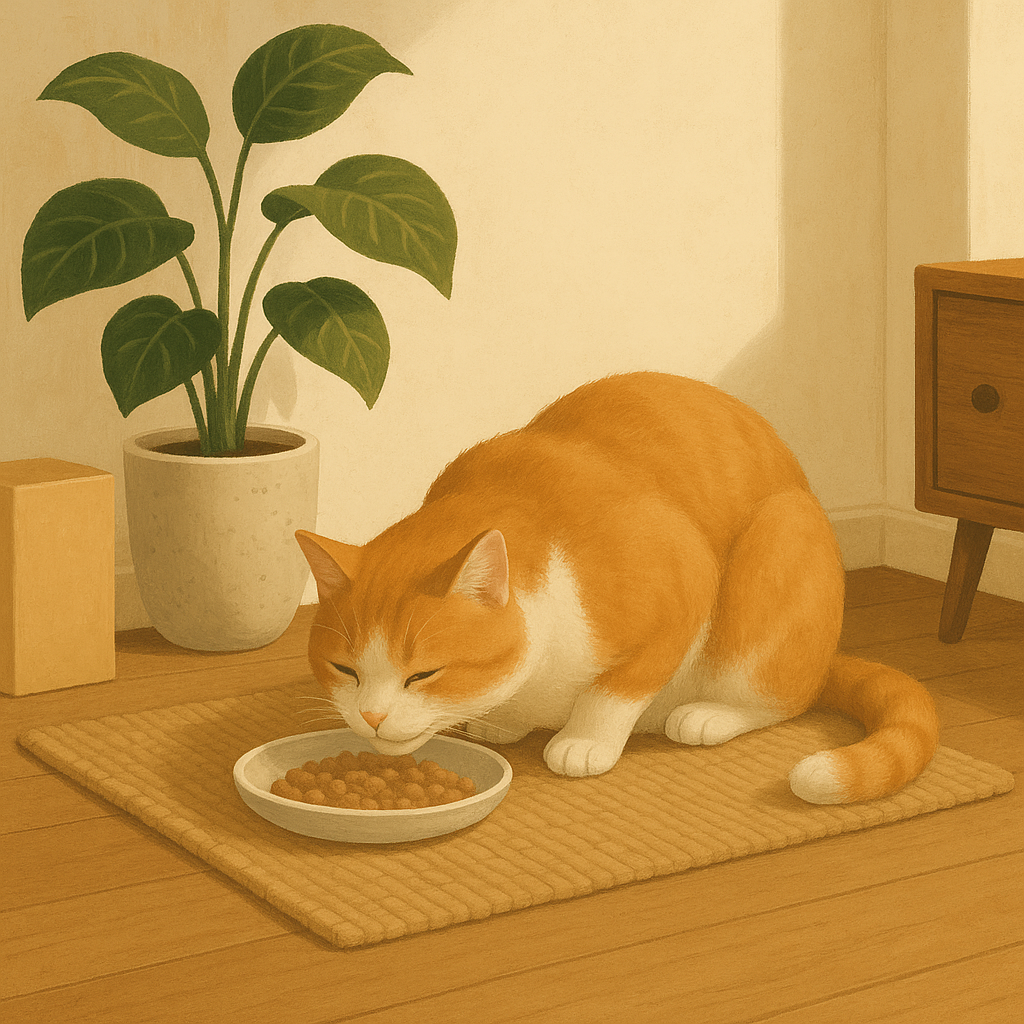
- Switch to a shallow, wide dish. A flat ceramic plate or a low saucer lets your cat eat without pressing her face or whiskers into anything. It is the single change that helps most often.
- Move the feeding station. Pick a quiet, open spot away from the litter box, loud appliances and foot traffic, with the bowl against a wall so she can face out and see the room. If a bad memory is the cause, a brand-new location resets the slate.
- Give each cat space. In a multi-cat home, feed cats in separate spots, ideally out of sight of one another, so no one feels watched or rushed.
- Keep it quiet and still. A heavier bowl that does not slide, and no collar tag clinking against metal, removes the small startles that interrupt eating.
- Lead with aroma and let her settle. Warming wet food slightly lifts the smell and can pull a hesitant cat in. Then step back. Hovering over the bowl adds pressure for a cat who is already unsure.
- Rebuild the association gently. For a cat with a real scare attached to mealtime, hand-feeding a few bites of something she loves, in the new calm spot, helps her relearn that the bowl means good things.
If your cat is hesitant specifically because she has learned to distrust her food after a bad experience, that is its own pattern worth understanding. Our guide on a cat who will not eat after an illness walks through rebuilding appetite when a negative association has formed, and the same gentle, low-pressure approach applies here.
When the bowl is not really the problem
Sometimes “scared of the bowl” is the visible edge of a fussier eater underneath. A cat who is genuinely picky about texture or smell may approach, sniff, and back off in a way that looks like fear of the dish when it is really a verdict on the food. That is a different problem with a different fix, and it is worth telling the two apart so you are not endlessly swapping bowls when the issue is what is in them.
A cat who has learned to distrust mealtime often does best with food that is easy to love: a strong, meaty aroma, a clean ingredient list, and enough novelty to feel like a fresh start rather than the thing she has been refusing. Aroma-forward options like a freeze-dried food or topper can coax a wary eater back to the dish, and a rotation of single-ingredient treats offered in the new, calm spot helps rebuild a good feeling around eating. Pair the right bowl and location with food she actually wants, and most of the drama at the dish disappears.
When to call the vet
Bowl avoidance is usually a setup problem, not a medical one. But because pain and nausea can hide behind the exact same behavior, treat the following as reasons to check with your vet before you keep experimenting at home.
- The fear is brand-new for a cat who always ate normally, especially if she is eating less.
- You see drooling, pawing at the mouth, bad breath, or food dropping from her mouth, which can point to dental pain.
- The avoidance comes with vomiting, weight loss, lethargy or hiding.
- She tries to eat but seems to find it physically uncomfortable to lower her head or chew.
- She has eaten little or nothing for 24 to 48 hours. In cats this is a medical situation, not a feeding one, because of the risk of hepatic lipidosis.4
A cat who is bright, holding her weight and clearly wants to eat once the setup is right is almost certainly reacting to the bowl or its surroundings. A cat who is avoiding the bowl because eating itself has become hard is a different matter, and our guide on a cat who suddenly will not eat covers the warning signs and when to go straight in.
The bottom line
A cat who seems scared of her food bowl is usually telling you the bowl is wrong, the spot is stressful, or something there once frightened her, not that the food has failed. Swap to a shallow dish, move the station somewhere calm and open, and rule out pain if the behavior is new. If she settles right back in, you have your answer. If she is still hesitant once the setup is right, the issue may be the food itself, and our free picky-eater quiz sorts out what kind of eater your cat is and returns a feeding plan built around it. It takes about two minutes and is the fastest way to stop guessing at the bowl.
This article is general information, not veterinary advice. A sudden change in your cat’s appetite or eating habits can signal a medical problem, so when in doubt, check with your vet. TheCatWellness may earn a commission from links to products we recommend, at no extra cost to you.