Tiki Cat vs Weruva wet food: which premium can fits your cat?
At the intake desk, owners weighing premium wet food almost always had the same two cans in the bag: Tiki Cat and Weruva. Both brands built their whole identity around wet food instead of treating it as a side project of a bigger dry-food line, which is rarer than the pet aisle makes it look. The real difference between them isn’t quality. It’s format and formulation standard. Tiki Cat wins when you want a broth-based, shredded format cleared for every life stage, kittens included. Weruva wins when you want the widest true recipe rotation from a company that’s stayed independent and family-run since it started.
As Amazon Associates we earn from qualifying purchases. Some links in this post are affiliate links; if you buy through them, we earn a small commission at no extra cost to you. We only recommend products we’ve used or researched thoroughly. See our full disclosure for details.
How they compare at a glance

Tiki Cat After Dark Variety Pack
12 x 2.8 oz cans · 6 recipes, shredded meat in broth
- ✓ Formulated to meet AAFCO’s nutrient profile for all life stages, kittens included
- ✓ Grain-free, potato-free and non-GMO across every recipe
- ✓ High-moisture broth format, useful for a cat that under-drinks
on Amazon
Price as of Sep 21, 2026, 9:21 AM EDT. Product prices and availability are accurate as of the date/time indicated and are subject to change.

24 x 3 oz cans · 11 recipes, chunks or puree in gravy
- ✓ Independent, family-owned company since 2006
- ✓ Human-grade sourced meat and fish, several recipes fish-forward instead of chicken-forward
- ✓ Grain-free, gluten-free and carrageenan-free
on Amazon
Price as of Sep 21, 2026, 9:21 AM EDT. Product prices and availability are accurate as of the date/time indicated and are subject to change.
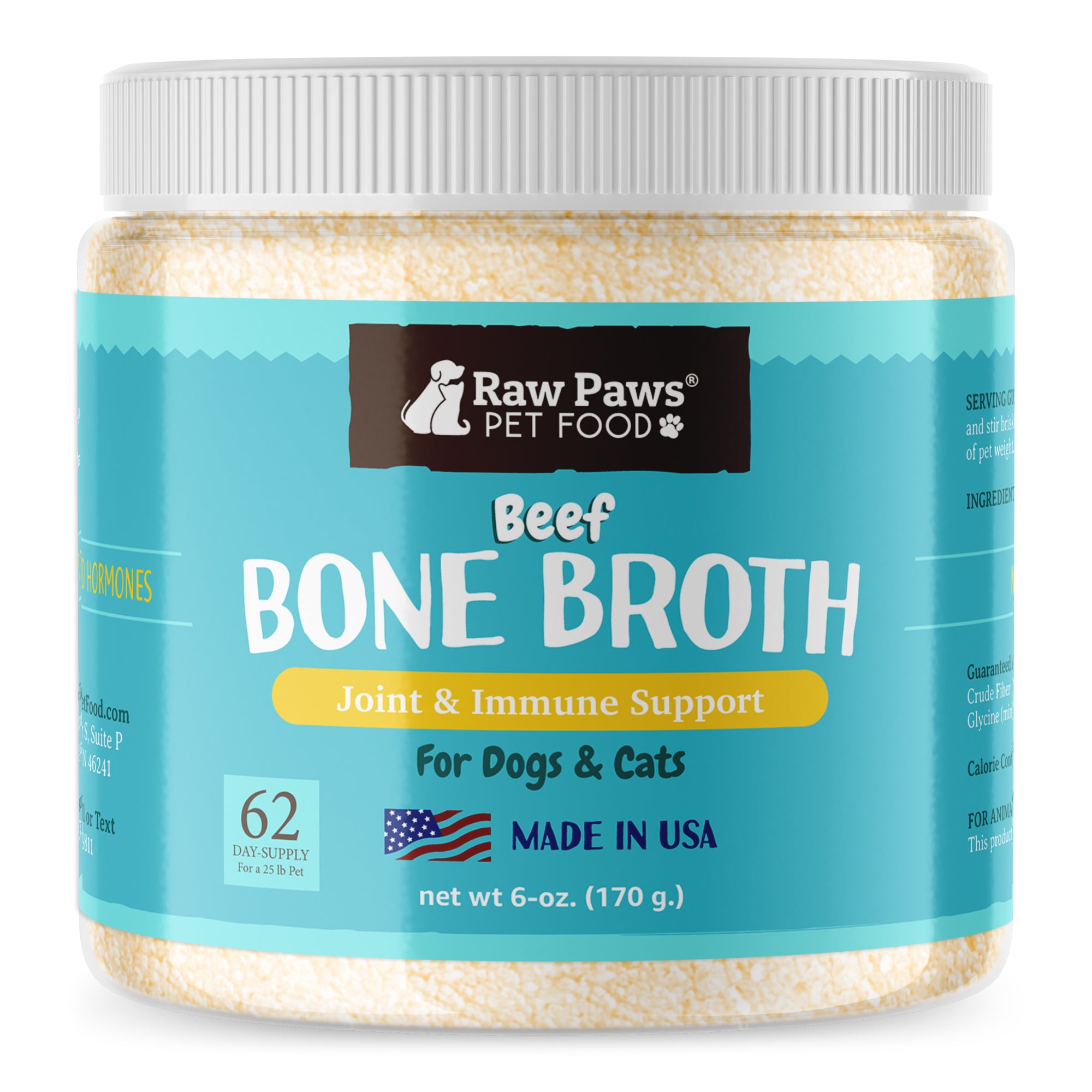
Raw Paws Beef Bone Broth Supplement Powder
6 oz jar · add-on topper, not a standalone food · made in USA
- ✓ Grain-free, gluten-free protein powder that mixes into either brand’s cans
- ✓ A cheap way to add extra moisture and flavor on a day your cat leaves a can half-eaten
- ✓ Useful for easing a cat between the two formats below
on Raw Paws Pet Food
Price as of Sep 21, 2026, 9:21 AM EDT. Product prices and availability are accurate as of the date/time indicated and are subject to change.
| Tiki Cat After Dark | Weruva Classic Cat | Bone broth topper | |
|---|---|---|---|
| Who makes it | Petropics, now part of General Mills’ pet-food portfolio | Independent, family-owned since 2006 | Raw Paws Pet Food, a separate small pet-food company |
| AAFCO life stage | All life stages, including growth | Adult maintenance only | Not a standalone food, no life-stage statement to compare |
| Format | Shredded meat in broth | Chunks or puree in gravy | Powder, mixed into either format |
| Recipe count | 6 recipes, all chicken-based | 11 recipes, poultry and fish | One flavor, beef |
| Manufacturing | Human-grade facility, Thailand | Human-grade facility, Thailand | Made in USA |
| Best fit | A household with a kitten, or a cat that does well on chicken and broth | An adult cat where real protein rotation, including fish, is the goal | Either cat, on a day the bowl needs more moisture or appeal |
The short version
- Both are AAFCO complete and balanced, but for different life stages. Tiki Cat After Dark is formulated to meet AAFCO’s nutrient profile for all life stages, which covers kittens. Weruva Classic Cat is formulated for adult maintenance only. [1]
- Weruva‘s edge is real recipe variety. 11 recipes split between poultry and fish, against Tiki Cat‘s 6 recipes, all built on a chicken broth base.
- Tiki Cat‘s broth format runs surprisingly protein-dense once you adjust for moisture, using the same dry-matter conversion the FDA walks through for comparing wet foods. [2]
- “Human-grade” isn’t the differentiator here. Both brands manufacture in human-grade facilities in Thailand, so that claim is a tie, not a reason to pick one over the other.
- Ownership differs sharply. Weruva has stayed independent and family-run since 2006. Tiki Cat‘s parent company sold its North American premium cat business to General Mills in 2024.
- For a multi-cat household with a kitten in the mix, Tiki Cat‘s life-stage coverage matters more day to day than Weruva‘s recipe count.
In this guide
Who makes them · What each AAFCO statement actually covers · Broth versus chunks: format and protein density · Sourcing and manufacturing · Which one fits an indoor cat · How I compared them · Common questions · When to talk to your vet
Who makes them
Both brands started as small operations built entirely around wet food, which is unusual. Most cat-food companies build a dry-food line first and add canned food later. Weruva was founded in 2006 by David and Stacie Forman, who named the company after their three rescue cats, Webster, Rudi and Vanessa. It’s remained independent and family-owned since, headquartered in Natick, Massachusetts. Tiki Cat has a different story. It launched in 2005 under Petropics, became part of Whitebridge Pet Brands in 2015, and in late 2024, General Mills acquired Whitebridge’s North American premium cat feeding and treating business, which included the entire Tiki Pets portfolio. Tiki Cat is now one brand inside a much larger consumer packaged-goods company, not an independent operator.
That ownership shift doesn’t automatically make a food better or worse. What it does change is scale: a General Mills-owned brand has different quality-control infrastructure, supplier purchasing power and recall response resources than a company the size Weruva still is. Whether that matters to you depends on whether you value the resources of a large company or the accountability of a smaller one that’s had the same owners for two decades.
What each AAFCO statement actually covers
Before comparing ingredients, it’s worth reading the actual AAFCO statement on each label rather than assuming “complete and balanced” means the same thing everywhere. To carry that phrase, a cat food has to either meet one of AAFCO’s nutrient profiles or pass an AAFCO feeding trial, and AAFCO maintains two separate profiles: one for growth and reproduction, and one for adult maintenance. [2][4] Tiki Cat After Dark‘s label states it’s formulated to meet AAFCO’s nutrient profile for all life stages, which is the stricter of the two since it has to satisfy a growing kitten’s needs as well as an adult’s. Weruva Classic Cat‘s label states adult maintenance only. That’s a real, checkable difference, not marketing language: if you’re feeding a household with a kitten alongside adult cats, Weruva‘s line isn’t formulated to be that kitten’s sole food, while Tiki Cat‘s is.
Broth versus chunks: format and protein density
Tiki Cat After Dark is a shredded format: fine strands of meat suspended in broth, with moisture guarantees around 81 to 83 percent depending on the recipe. Weruva Classic Cat runs chunkier, meat or fish pieces in a gravy or puree, with moisture guarantees up to 85 percent. On the printed label alone, Weruva‘s crude protein minimum reads lower than Tiki Cat‘s, which looks like Tiki Cat wins outright. It’s more complicated than that. Guaranteed analysis numbers are listed “as fed,” meaning with all that water still counted, and comparing two high-moisture foods that way can mislead you. The FDA’s own guidance walks through converting to a dry-matter basis instead: divide the protein guarantee by the product’s dry-matter percentage (100 minus moisture), then multiply by 100. [2] Run that math on the Chicken & Beef recipe from Tiki Cat‘s line (13.4 percent protein, 81 percent moisture) and you get roughly 70 percent protein on a dry-matter basis. Run it on a typical Weruva Classic Cat recipe (around 10 percent protein, 85 percent moisture) and you land closer to 67 percent. The gap narrows once you’re comparing like with like, but Tiki Cat‘s broth format doesn’t lose on protein density the way the raw label numbers suggest. Individual recipes vary within each line, so treat this as illustrative rather than a guarantee for every can on the shelf.
Sourcing and manufacturing
Here’s a place where the two brands genuinely tie instead of one beating the other. Both Tiki Cat and Weruva manufacture their wet food in human-grade facilities in Thailand, a detail that surprises a lot of owners who assume “human-grade” and “made in the USA” go together. Neither does. Weruva markets its meat and fish as human-grade sourced and hand-flaked rather than ground into a uniform paste, which shows up as visible texture in the can. Tiki Cat leans on a non-GMO, grain-free, potato-free claim across the entire After Dark line and a broth-forward format meant to mimic the moisture content of prey. Both skip carrageenan and major grains. If sourcing quality is the question, you’re not choosing between a premium option and a budget one. You’re choosing between two premium options with different textures and different life-stage coverage.

Which one fits an indoor cat
Indoor cats tend to eat a narrower diet than a cat with outdoor access, since there’s no scavenging or hunting filling in the gaps, and canned food’s high moisture content does real work for a cat that isn’t drinking enough on its own. Wet food can run up to 80 percent water, against roughly 4 ounces of total daily water needed per 5 pounds of body weight. [3] Feeding two or three different foods in rotation, rather than one exclusive can, also helps prevent a cat from locking onto a single food and refusing everything else later. [1] If your household includes a kitten, or you just want fewer decisions with one line that covers every life stage, Tiki Cat After Dark is the simpler starting point. If your cats are all adults and you want the broadest rotation, including fish-forward recipes that get you away from an all-chicken diet, Weruva Classic Cat covers more ground.
How I compared them
This is a researched comparison, not a feeding trial: I haven’t run these two brands side by side in my own home, so I won’t claim I did. What I did do is read both brands’ AAFCO statements directly off the label copy, run the FDA’s own dry-matter conversion on the guaranteed analysis panels rather than comparing the as-fed numbers at face value and dig into each company’s ownership history, since that’s the kind of thing owners ask about but rarely get a straight answer on. That’s also where I landed on the honest limitation of favoring Tiki Cat on protein density and life-stage coverage. Weruva‘s chunkier format and broader recipe count, including real fish-based options, is the better pick for a cat that needs genuine protein rotation away from chicken, and its hand-flaked texture is simply preferred by some cats over a shredded, saucier consistency. Where the two brands tie, both manufacturing human-grade in Thailand, both skipping carrageenan, I’ve said so instead of manufacturing a difference just to fill out a comparison.
Common questions
Can I rotate Tiki Cat and Weruva in the same feeding routine?
Yes. Rotating foods and brands is fine for a healthy adult cat and can help avoid an exclusive preference forming for just one food. [1]
Does the higher dry-matter protein number mean I should feed Tiki Cat exclusively?
No. Dry-matter protein is one useful comparison point, not the whole picture. Life stage, whether your cat tolerates chicken well and how much variety you want in the rotation all matter as much or more.
Is Tiki Cat‘s kitten-safe label the same as a kitten-specific food?
Not exactly. “All life stages” means the formula meets the nutrient minimums for growth as well as maintenance, so it’s safe to feed a kitten, but it isn’t marketed or portioned specifically for kitten growth the way a dedicated kitten formula is.
When to talk to your vet
Switching between two well-formulated wet foods is usually low stakes, but call your vet before making any food change if your cat has a diagnosed condition, is on a prescription diet or is a kitten under a vet’s growth monitoring. Call sooner rather than later if a switch is followed by vomiting, diarrhea lasting more than a day or two, or a cat who stops eating altogether. A cat that refuses food for more than about 24 hours needs medical attention regardless of which can started the switch. [1]
The bottom line
- Choose Tiki Cat After Dark if your household includes a kitten, you want one line that covers every life stage or your cat does well on chicken and prefers a saucier, broth-forward texture.
- Choose Weruva Classic Cat if your cats are all adults and you want the widest real rotation, including fish-based recipes, from a company that’s stayed independent since 2006.
Both are genuinely premium wet food, manufactured in the same kind of human-grade facility, and neither is the wrong answer. The choice comes down to which cats are eating it and which format they’ll actually finish.
Sources
More nutrition guides
- Tiki Cat vs Weruva: which is better for a sensitive stomach?
- Weruva vs Wellness CORE: which fits your indoor cat?
- Indoor cat nutrition: what actually works
- The Best Kitten Foods: 3 Picks That Meet the Growth Standard
- Purina Pro Plan vs Blue Buffalo Wilderness
- Royal Canin vs Hill’s Science Diet: how to choose