Best Single-Ingredient Cat Treats: PureBites, Vital Essentials, Whole Life & Stewart Compared
Single-ingredient cat treats have become a default recommendation from many feline nutrition voices for a simple reason: when a treat contains one ingredient, you know exactly what you are feeding. For picky cats, for cats with food sensitivities and for owners doing any kind of dietary troubleshooting, that clarity is the baseline, not a luxury.
As Amazon Associates we earn from qualifying purchases. Some links in this post are affiliate links; if you buy through them, we earn a small commission at no extra cost to you. We only recommend products we’ve used or researched thoroughly. See our full disclosure.
This guide covers four picks across three brands worth knowing (PureBites, Vital Essentials and Whole Life Pet) and maps each to the cat eating profile it is most likely to work for. The six picky-eater profiles referenced below are an in-house framework we use in our feeding quiz; they are not a clinical typology.
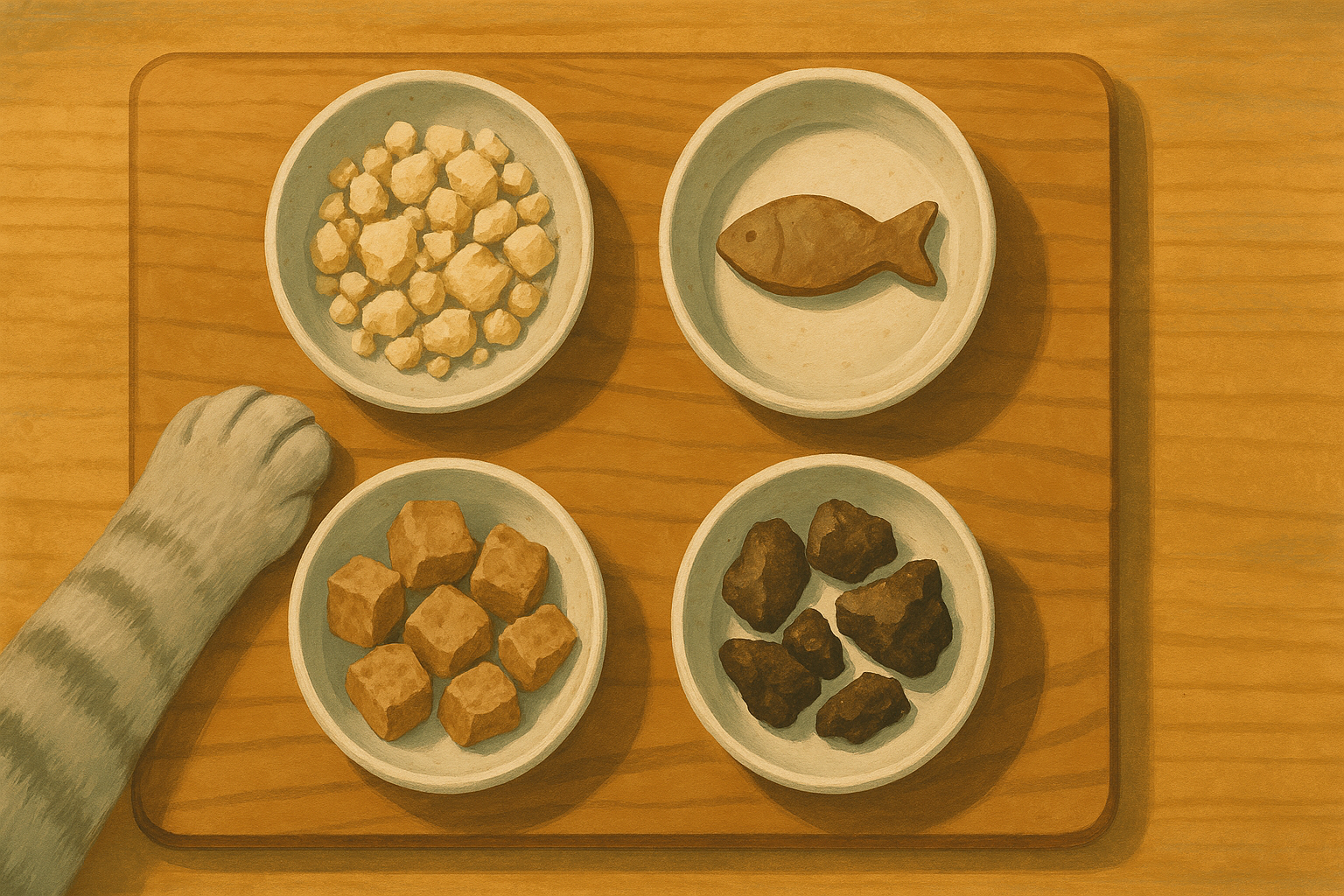
The picks at a glance:
- Best single-ingredient treat for Learned-Aversion cats and elimination diets: PureBites Chicken Breast
- Best single-ingredient treat for cats that refuse poultry: Vital Essentials Freeze-Dried Minnows
- Best single-ingredient treat for Instinct-Driven Refusers: Vital Essentials Freeze-Dried Chicken Breast
- Best single-ingredient treat for rotation across proteins: Whole Life Pet Just One Ingredient Treats
What makes a treat “single-ingredient”
A single-ingredient treat contains one protein source and nothing else: no fillers, no flavor enhancers, no binding agents. The best versions are freeze-dried, where a single protein (chicken breast, salmon, minnows, turkey liver) has been freeze-dried whole or in pieces. The ingredient list reads, plainly, “chicken breast” or “minnows.”
This matters for two reasons. First, if your cat reacts to a specific ingredient (a protein, a preservative, a filler), a single-ingredient treat makes it possible to pinpoint and eliminate the trigger. You cannot do that with a multi-ingredient treat. Second, for cats that are suspicious of unfamiliar food smells, a single freeze-dried protein smells unambiguously like that protein. There are no competing odor signals to confuse the evaluation; cats rely heavily on smell to decide whether to engage with food.1
A note on freeze-dried safety
Freeze-drying removes water at very low temperatures under vacuum. It does not heat-kill pathogens the way cooking does. Reputable brands rotate through secondary pathogen-reduction steps such as High-Pressure Processing (HPP), but not every freeze-dried product on the market does and the FDA has repeatedly flagged raw and freeze-dried pet products as a Salmonella and Listeria source.2 Confirm a brand’s pathogen-reduction process before feeding to households with young children, pregnant adults or immunocompromised members and handle freeze-dried treats with the same hygiene you would handle raw meat.
The four picks
1. PureBites Freeze-Dried Cat Treats
PureBites Chicken Breast (ASIN: B007MECZUA) is the most widely stocked single-ingredient treat in the category. The ingredient list is one item: chicken breast. The pieces are small, slightly crunchy and smell strongly of cooked chicken. PureBites does not currently use High Pressure Processing; the aroma is clean and unmistakably protein-forward.
Single-protein treats are sometimes used as a counter-conditioning tool in feline behavior medicine for food-averse cats. PureBites’ chicken-only formula fits that use, because hand-feeding a single, predictable protein lets an owner build positive food associations without introducing new sensitivities. It is also the safest off-the-shelf treat for cats on chicken-based elimination diets.
- Ingredient: Chicken breast only
- Texture: Small, light, slightly crunchy; dissolves quickly in the mouth
- Best for: Learned-Aversion cats, Kibble Loyalists, any cat on a limited-ingredient or elimination diet
- Popularity: One of the most widely stocked and frequently recommended single-ingredient treats
- Value: Budget-friendly; sold in small bags
2. Vital Essentials Freeze-Dried Treats, Minnows
The Vital Essentials Freeze-Dried Minnows (ASIN: B0BWBK16NH) are whole freeze-dried minnows. They are visually unmistakable, intensely aromatic and texturally unlike any other treat on the market. Each minnow is crunchy when dry but delicate, breaking apart easily when the cat bites it. The fish smell is potent at room temperature and intensifies when the bag is opened.
This is the treat that converts cats who have rejected the poultry category. For Texture & Smell Critics, the dramatic aroma differentiation is the lever. For Instinct-Driven Refusers and Discerning Gourmets, the visual of a whole recognizable fish provides the quality signal that makes them engage. Owners often report that cats who ignored treats for months will actively seek this product once introduced; that pattern is anecdotal but consistent across the reviews we have read.
- Ingredient: Whole minnows only
- Texture: Whole fish, crunchy and delicate, breaks apart easily
- Best for: Texture & Smell Critics, Instinct-Driven Refusers, Discerning Gourmets; any cat that refuses poultry treats
- Popularity: Well regarded among owners of fish-motivated cats
- Value: Mid-range; sold in small bags
3. Vital Essentials Freeze-Dried Treats, Chicken Breast
The Vital Essentials Chicken Breast treats (ASIN: B0BWBJ2HHB) are Vital Essentials’ answer to PureBites in the poultry category. The key difference is format. Where PureBites pieces are small and crumbly, the Vital Essentials version comes in larger, slightly denser pieces that more closely resemble a chunk of real chicken. Instinct-Driven Refusers tend to respond better to this format because the size and shape trigger the “prey piece” recognition pattern more reliably than small crumbles do.
If you have tried PureBites and the cat ignores it, try Vital Essentials. The ingredient is the same (chicken breast); the physical form factor is different. Many cats that reject one accept the other. This is not a quality difference; it is a format preference.
- Ingredient: Chicken breast only
- Texture: Larger, denser pieces than PureBites; more visually meat-like
- Best for: Instinct-Driven Refusers who rejected PureBites; cats that prefer larger pieces
- Popularity: A popular poultry alternative for cats that pass on PureBites
- Value: Mid-range; sold in small bags
4. Whole Life Pet Just One Ingredient Treats
Whole Life Pet Just One Ingredient Treats is the most variety-focused brand in this category. It offers freeze-dried chicken, salmon, beef and turkey liver as single-ingredient products in resealable pouches. The salmon and turkey liver options are the most useful for rotation protocols, because both are strongly aromatic and rotating two or three proteins prevents flavor fatigue without requiring you to change the cat’s primary food.
Turkey liver deserves a specific mention. It is extremely palatable to most cats (liver in general is a strong appetite stimulant), and the freeze-dried format makes it less aromatic in the household than fresh liver. For cats that are highly food-motivated but have developed fatigue around chicken or salmon treats, turkey liver is often the reset that rebuilds enthusiasm for the treat routine.
- Ingredients: Varies by SKU, single protein per product
- Best for: Serial Flavor Fatiguers; cats that have developed treat fatigue; rotation protocols
- Key SKUs: Chicken, salmon, beef, turkey liver
- Where to buy: Chewy, Petco, Amazon (good availability across channels)
How to use treats for each eating profile
Texture & Smell Critic
Use treats to build positive food associations, not to replace meal interest. Offer the Vital Essentials Minnows before mealtime, one or two pieces, as a pre-meal primer that raises the cat’s aromatic alertness. Follow immediately with the main meal. Over time this primes the cat to approach the bowl with higher food interest. Do not use crumbly treats like PureBites as a meal topper for this profile, because the visible change in the bowl surface can itself trigger refusal.
Serial Flavor Fatiguer
Rotate the treat protein weekly. Assign days of the week to specific treat types (chicken one week, minnows the next, turkey liver after that) and keep to the schedule. The goal is to prevent the cat from learning any single treat smell as routine. Whole Life’s variety makes it the natural choice for this protocol.
Instinct-Driven Refuser
Start with the Vital Essentials Chicken Breast or Minnows as a standalone treat offered away from the food bowl. Once accepted, begin placing one or two pieces inside the food bowl before adding the main meal. The goal is to train the cat to associate the bowl with prey-signal smell. Over one or two weeks, this reframes the bowl itself as a prey location, which is a useful behavioral shift for this profile.
Learned-Aversion Cat
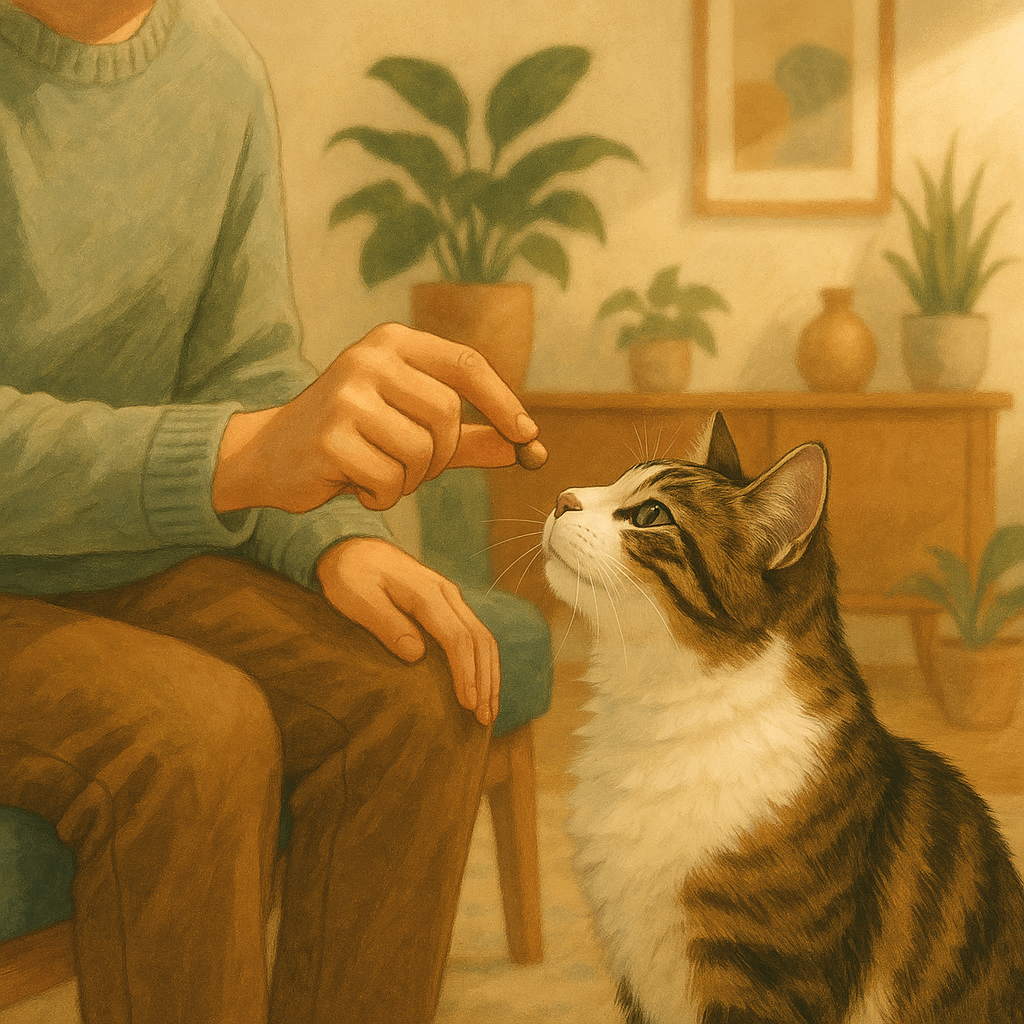
PureBites Chicken is the tool here. Feed one or two pieces by hand, not in the bowl, during non-mealtime periods. The goal is counter-conditioning, building positive food associations with zero pressure or performance expectation. Do this consistently for 5 to 10 minutes per day for at least two weeks before changing anything about mealtime. The treat routine builds a “food is positive” baseline that transfers to mealtime over time. For aversion cases tied to a sudden refusal, also rule out a medical cause first; our guide to a cat that has suddenly stopped eating covers the urgent picture.
Kibble Loyalist
PureBites or Vital Essentials Chicken: small, dry, crunchy, familiar-feeling. Do not introduce fish or liver treats to Kibble Loyalists first, because the dramatic smell difference can trigger rejection. Start with the most kibble-like single-ingredient treat available (PureBites), build acceptance, then introduce more novel proteins over weeks.
Discerning Gourmet
Vital Essentials Minnows or Whole Life Turkey Liver. This cat responds to rarity and quality signals. Minnows read as specialty protein; turkey liver is intensely aromatic and feels premium in a way chicken does not. Offer one piece at a time; presentation matters. Hand-feed rather than bowl-feeding; the direct offering communicates value to this profile in a way dropping treats in a bowl does not.
A note on treat volume and daily calorie balance
Freeze-dried single-ingredient treats are calorie-dense. A PureBites Chicken piece is roughly 1 to 2 calories; a Vital Essentials minnow is approximately 1.5 calories. For a 10-pound cat on a 200-calorie-per-day diet, five treats represent about 4 to 5 percent of the daily intake, which is within the conventional 10 percent guideline for treats. For cats on restricted diets, or for owners using treats heavily during training or behavior work, it is worth tracking.3
The practical rule: count treats against the daily intake once you are giving more than five per day, especially for cats managing weight or a metabolic condition. For most cats being fed two or three freeze-dried treats per day as a supplement or reward, the caloric impact is negligible.
For the broader picture on fussy eating, see our picky-eater guide; for the slow, low-pressure way to change a cat’s primary food, see how to get a picky cat to accept new food. For the full feeding picture matched to your cat’s eating profile, take our free two-minute picky-eater quiz, which generates a profile-specific food plan with specific product recommendations for every meal and treat category.
One more worth trying
Outside the brands reviewed above, we’ve also tested Raw Paws Pet Food’s single-ingredient freeze-dried treats and rate them highly on the same criteria: one ingredient, no additives, real whole-muscle meat.
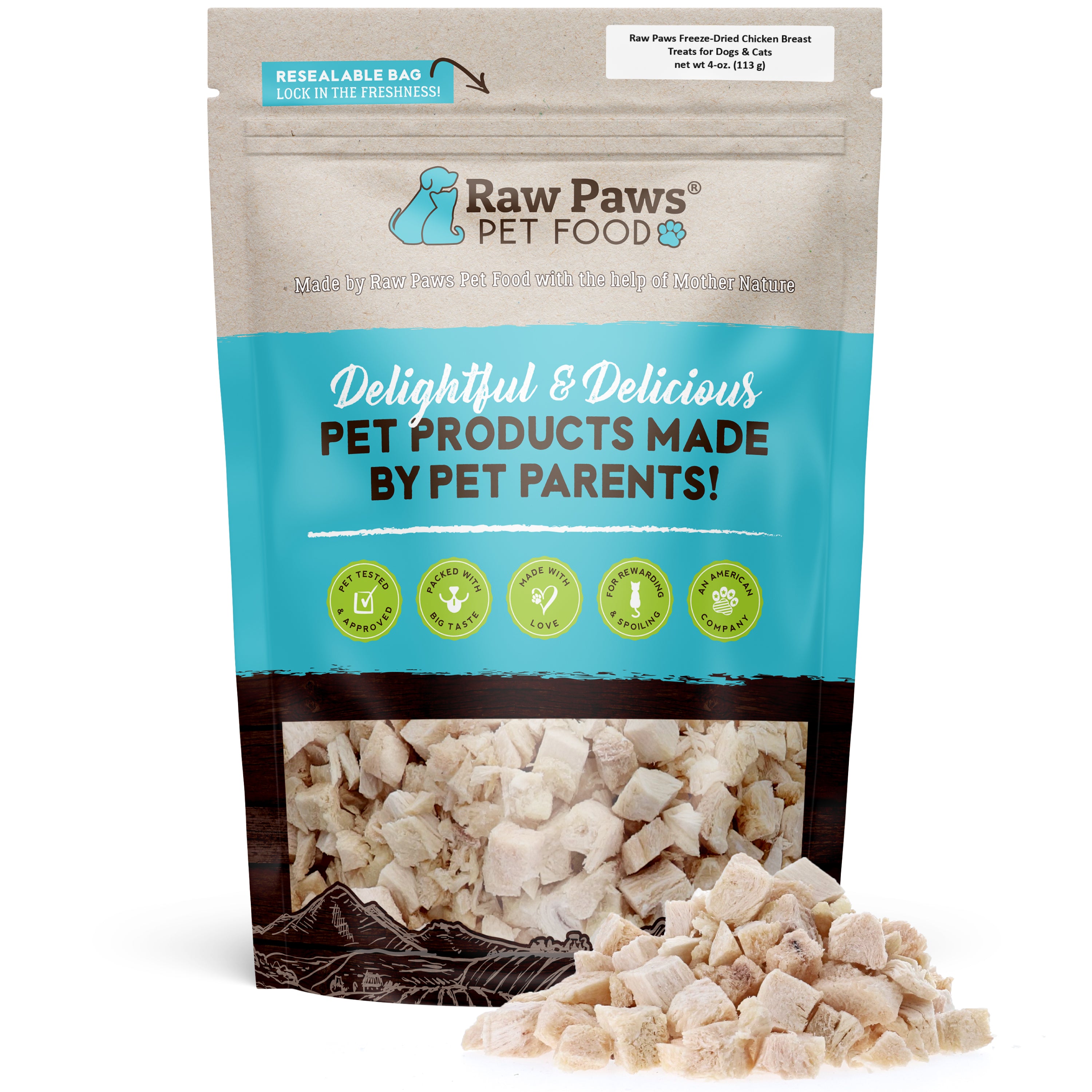
Freeze Dried Chicken Breast Treats (Raw Paws)
4 oz bag · single ingredient · whole-muscle freeze-dried chicken breast
- ✓ Single ingredient: chicken breast, nothing else
- ✓ No preservatives, fillers, flavors or colors
- ✓ Whole-muscle pieces, not a powder or paste — visible, smellable real meat
- ✓ Crumble over food as a topper or feed as a stand-alone treat
on Raw Paws Pet Food
Price as of Sep 21, 2026, 9:21 AM EDT. Product prices and availability are accurate as of the date/time indicated and are subject to change.
Sources
- Cornell Feline Health Center, “Feeding Your Cat”
- FDA Center for Veterinary Medicine, “Get the Facts! Raw Pet Food Diets Can Be Dangerous”
- PureBites, Vital Essentials and Whole Life Pet product labelling, reviewed May 2026
- Manufacturer product pages and specifications, reviewed May 2026